





The following is the established format for referencing this article:
Sullivan, J. D., J. Spendelow, S. J. Denenberg, D. F. Brinker, P. McGowan, C. R. Callahan, A. W. O’Donnell, J. G. Crockett, and D. Prosser. 2026. An evaluation of transmitter effects on the return rate of adult and juvenile Common Terns to a breeding colony. Journal of Field Ornithology 97(3):8.ABSTRACT
Advancements in technology have facilitated a rapid expansion in the range of species for which tracking studies can be implemented. Such efforts often require unique attachment methods or materials for which careful evaluation is required to fully understand potential tagging effects and subsequent implications. During the 2021 breeding season, our research team affixed two types of light-weight transmitters to adult and pre-fledgling juvenile Common Terns (Sterna hirundo) with leg-loop harnesses made of elastic cord. Our initial observations of these marked birds detected minimal differences in behavior and nesting success of marked adults, and failed to detect any notable impacts on the growth rate or behavior of marked juveniles, but were limited to a single year of data. To provide further insight into the potential effects of these tagging methods, we evaluated return and nesting rates for the 2022 through 2025 breeding seasons. We found that all individuals observed on the breeding grounds in the years following transmitter attachment had not retained the transmitter. The observed tag loss suggest that tag retention could be considered when planning future efforts, and limits our analyses to understanding lagged effects of the unknown duration of actual attachment. With this limitation in mind, we found that birds marked as adults with center-weighted and rear-weighted tags were 1.00 and 0.76 times as likely, respectively, to return to the colony site, and 1.09 and 0.77 times as likely, respectively, to be observed nesting when compared with unmarked controls. Similarly, birds marked as juveniles with rear-weighted transmitters were 0.54 as likely to return, and 0.72 times as likely to nest in subsequent years. These results suggest no negative impacts of center-weighted attachment on return or nesting rates, but moderate support declines in both metrics for birds marked with rear-weighted transmitters.
RESUMEN
Los avances tecnológicos han facilitado una rápida expansión en el rango de especies para las cuales pueden implementarse estudios de seguimiento. Estos esfuerzos suelen requerir métodos o materiales de fijación únicos, cuya evaluación cuidadosa resulta necesaria para comprender plenamente los posibles efectos del instrumentado y sus implicancias posteriores. Durante la temporada reproductiva 2021, nuestro equipo de investigación colocó dos tipos de transmisores livianos en charranes comunes (Sterna hirundo) adultos y juveniles prevolantones, utilizando arneses de perneras confeccionados con cordón elástico. Nuestras observaciones iniciales de estas aves instrumentadas detectaron diferencias mínimas en el comportamiento y el éxito reproductivo de los adultos instrumentados, y no lograron detectar impactos notorios en la tasa de crecimiento ni en el comportamiento de los juveniles instrumentados, aunque estuvieron limitadas a un solo año de datos. Para ofrecer una mayor perspectiva sobre los posibles efectos de estos métodos de instrumentación, evaluamos las tasas de retorno y de nidificación durante las temporadas reproductivas de 2022 a 2025. Encontramos que todos los individuos observados en las áreas de reproducción en los años posteriores a la colocación de los transmisores no habían retenido el dispositivo. La pérdida de dispositivos observada sugiere que la retención de los transmisores debería considerarse al planificar futuros esfuerzos y limita nuestros análisis a la comprensión de los efectos diferidos asociados con la duración desconocida de la colocación efectiva. Considerando esta limitación, descubrimos que las aves adultas instrumentadas con transmisores de peso centrado y de peso posterior tenían 1,00 y 0,76 veces más probabilidades, respectivamente, de regresar al sitio de la colonia, y 1,09 y 0,77 veces más probabilidades, respectivamente, de ser observadas nidificando en comparación con los controles no instrumentados. De manera similar, las aves instrumentadas como juveniles con transmisores de peso posterior tuvieron 0,54 veces la probabilidad de regresar y 0,72 veces la probabilidad de nidificar en años posteriores. Estos resultados sugieren que los transmisores de peso centrado no tienen efectos negativos en las tasas de retorno o nidificación, pero indican un descenso moderado en ambas métricas para las aves instrumentadas con transmisores de peso posterior.
INTRODUCTION
Rapid technological advancements over the past 30 years have resulted in increased ability to track the movement ecology of wild birds (Barron et al. 2010, Gould et al. 2024). For instance, the emergence of tools such as satellite transmitters and the Motus network (Taylor et al. 2017) have allowed wildlife tracking to become both cheaper and feasible for use on a wider array of species (Iverson et al. 2023, Wild et al. 2023). These developments have facilitated novel insights into the foraging grounds (Zhang et al. 2019, Danyk et al. 2025), migratory pathways (Herbert et al. 2022, Caldwell et al. 2025), disease ecology (Maxted et al. 2016), and other life history aspects of small-bodied waterbirds.
Despite notable advances in the range of species and life stages now suitable for research via biologging, many aspects of avian ecology remain unexplored. For instance, little is known about movements and behaviors of Common Terns (Sterna hirundo) following their departure from the natal grounds through their return during their third summer (Arnold et al. 2020). However, addressing this data gap requires affixing a transmitter to pre-fledged juveniles in a manner that will allow the tag to be retained for at least a full migratory cycle without causing negative consequences for the marked individual. An effort to address this data gap was reported in Buck et al. (2022a), where elastic material was used to attach transmitters to adult and pre-fledged Common Terns via a leg-loop harness to gain insight into the movement of this species during the post-fledging dependency period and fall migration. Buck et al. (2022a) selected a leg-loop harness because this allowed the solar panel (necessary to replace an inbuilt battery and reduce tag mass) to remain exposed. A leg-loop harness had been previously shown to yield low abrasion in growing Japanese Quail (Coturnix japonica; Buck et al. 2021), and was likely to avoid entanglement or flight restriction if sizing issues presented as birds aged (Mallory and Gilbert 2008, Paton et al. 2020). Although non-harness based tagging methods do exist, these were considered unsuitable for the behavior and physiology of the species, and unsuited for tag retention (Buck et al. 2022a). Similarly, Buck et al. (2022a) used elastic material because of a lack of abrasion in pilot efforts and the pliability this provided for any unexpected growth in pre-fledged juveniles. This approach had no meaningful impact on the reproductive success or behaviors of tagged adults, and tagged juveniles expressed no differences in fledging success or growth rate compared to unmarked controls (Buck et al. 2022a). The only difference observed between treatment and control groups was an increased rate of preening observed in transmitter marked juveniles, which did not appear to have detrimental effects.
Although Buck et al. (2022a) provided valuable insight into the apparent safety of their approach for marking adult and pre-fledged juvenile Common Terns, this work was primarily concerned with assessing potential impacts of tagging immediately after marking. Data on return rate and nesting success were evaluated, but these metrics were informed by a single year of data only (Buck et al. 2022a), and were relevant only to adults because juveniles would not be expected to return to natal breeding colonies until their third year (Becker and Ludwigs 2002, Arnold et al. 2020). This lack of insight is potentially problematic given that long-term impacts of leg-loop harnesses made of elastic material appear to be highly species specific. For instance, whereas species such as the Temminck’s Stint (Calidris temminckii; Lislevand and Hahn 2013), Whinchats (Saxicola rubetra; Blackburn et al. 2016), and numerous songbirds (Streby et al. 2015) appear to be minimally impacted, reduced return rates and survival have been reported for species such as the American Kestrel (Falco sparverius; Biles et al. 2022) and the Upland Sandpiper (Bartramia longicauda; Mong and Sandercock 2007). Additionally, between-season tag loss, in some cases by design, has been reported in species ranging from small songbirds to large gulls for which devices were attached with elastic leg-loop harnesses (e.g., Lislevand and Hahn 2013, Streby et al. 2015, Thaxter et al. 2015, Biles 2022).
This manuscript follows up on previous work of Buck et al. (2022a) to explore the return and nesting rates of tagged birds over the first four years following transmitter deployment. Additional years of data collection provide the opportunity to assess whether there have been observable tagging effects on factors such as return and nesting rates across a longer time period post-marking. Such follow-up efforts are a notable step in addressing the under-reporting of potential tagging effects associated with movement studies (Barron et al. 2010, Geen et al. 2019). Our objectives were to determine if transmitters attached to birds marked as adults or as juveniles had long-term impacts on return to the breeding colony or on future nesting, compared to unmarked controls. These additional data help to provide a more comprehensive evaluation of this tagging approach than was possible in initial reporting.
METHODS
Study area
This study took place on the Paul S. Sarbanes Ecosystem Restoration Project at Poplar Island (hereafter Poplar Island; 38.762° N, -76.384° W), located in the Maryland, USA portion of the Chesapeake Bay. Poplar Island uses dredged material from the shipping channels leading to the Port of Baltimore, Maryland to restore remote island habitat (Erwin et al. 2007). These restoration efforts have led to Poplar Island serving as an important breeding site for Common Terns (Sullivan et al. 2020).
Initial tagging
All tagging methods are described in detail in Buck et al. (2022a), but are briefly summarized here. We captured adult terns on the nest using walk-in traps, with nests of similar age (approximate day of incubation) paired such that each adult fixed with a transmitter (hereafter treatment) was paired with a control (not fixed with a transmitter) from a nearby nest. We chose juveniles to either be fitted with transmitters (hereafter treatment) or to serve as controls from the sample of individuals recaptured during colony checks, and meeting the following criteria: at least 14 days old, > 75 g (transmitter < 1.6% of body mass), and not from the nest of a treatment or control adult. Upon capture, we placed both treatment and control adults and juveniles in individual paper bags and transported them to the nearby banding station for processing.
We used two types of radio transmitters: Lotek NTS-1 Solar Nanotags (Lotek Wireless, Newmarket, Ontario, Canada; hereafter center-weighted transmitter), and Cellular Tracking Technologies Solar LifeTags (Rio Grande, New Jersey, USA; hereafter rear-weighted transmitter; Fig. 1). We attached both types of radio transmitters after the methods of Buck et al. (2022a), using a leg-loop harness (Rappole and Tipton 1991) made of 1 mm elastic cord (Stretch Magic, Soft Flex Company, Sonoma, California, USA) secured with a 2 mm sterling silver crimp bead, and with the addition of an overhand knot fixed with ethyl cyanoacrylate glue (Krazy Glue®, Columbus, Ohio, USA) immediately above the crimp (Fig. 1). The use of elastic cord is already well established in passerines (Streby et al. 2015, Raybuck et al. 2020), but with limited evaluation in waterbirds (Buck et al. 2022a, Caldwell et al. 2025). The entire transmitter/harness assembly weighed 2.0 g for center-weighted transmitters and 1.2 g for rear-weighted transmitters. At the time of transmitter deployment, transmitters averaged 1.8% of adult body mass for center-weighted transmitters (range = 1.6–1.9%), 1.0% of adult body mass for rear-weighted transmitters (0.9–1.1%), and 1.2% of juvenile body mass for rear-weighted transmitters (1.0–1.4%). Juveniles averaged 19 days old at the time of marking (14–30 d). Both treatment and control birds also received plastic field readable (PFR) bands made from polymethyl methacrylate (PMMA) with a height of 7.5 mm, and had a unique three-character alpha numeric sequence engraved in contrasting collars to the band field (i.e., either white on black, or black on white) to allow individual identification from a distance. PFR bands had slight overlap, and were sealed with glue at the time of marking.
Following transmitter attachment, we placed treatment birds in a clear plastic aerated bin (~1.0 x 0.7 x 0.5 m) under a shade tent for approximately two to five min to monitor for abnormal behavior, such as bow-legged walking or intense stress, prior to release. Release occurred at the banding site (proximal to the colony, within 50 m) to reduce the number of times researchers re-entered the colony. We processed control birds before treatment birds, and replaced them in a paper bag until the treatment bird was fully processed. This way we restrained treatment and control birds for a similar amount of time, and they could be simultaneously released. We processed juveniles in the same manner as adults, except that treatment birds were all fitted with rear-weighted transmitters. As with adults, we handled control juveniles in the same manner and for a similar amount of time as treatment juveniles. We released juveniles near the point of capture in their natal colony. Data on measurements collected from each individual, as well as processing time, are openly available (Buck et al. 2022b). A summary of sample size by age and transmitter type is provided in Table 1.
Colony monitoring
To determine the return rates of tagged birds across years, we conducted two different types of resighting surveys for adult and juvenile terns. First, as part of a broader effort to identify the parents at every identified Common Tern nest, a single researcher conducted resighting surveys in all Common Tern colonies on Poplar Island, with the observer moving slowly through the colony and observing and noting PFR bands (or lack thereof) at each nest via a spotting scope (Spendelow and Eichenwald 2018). Surveys occurred from mid-May through mid-July each year and were variable in length, time of day, and the number of surveys per colony, as dictated by presence of observable individuals, colony size, and current weather conditions. To limit disturbance to breeding pairs, observations were made from a seated position, and the observer withdrew from the colony if pairs were showing signs of heat stress or an unwillingness to attend the nest in their presence. Additionally, to allow for detections of tagged individuals on-island but not within breeding colonies, surveys were conducted at nearby staging and loafing areas on Poplar Island one to four times weekly. Finally, we reviewed all Motus detections on Poplar Island (Motus Station ID 7454) using the R package “motus” (Birds Canada 2022). To improve data reliability, we only considered detection events registering at least three consecutive signals from rear-weighted transmitters, and at least five consecutive signals from center-weighted transmitters (Birds Canada 2022). After data cleaning, we investigated detections starting from the time birds left the breeding grounds in 2021 (the year of transmitter deployment) through to January 2026.
As part of standard ongoing colony monitoring, we marked and monitored all Common Tern nests found on Poplar Island throughout the breeding season (Sullivan et al. 2020). Colony monitoring consisted of researchers walking parallel through the colony two to three times weekly, identifying and marking new nests with wooden stakes, recording the number of eggs and their condition per nest, and capturing juveniles for banding. Although data collected during colony monitoring have been previously used to evaluate hatch success across treatment groups (Buck et al. 2022a), such analyses were excluded from this study because of heavy predation of eggs and chicks, resulting in high uncertainty in nest fates. Predation is believed to be the result of increasing predator populations, and not a result of research activities (Prosser 2025).
Statistical analysis
We examined the return rate and nesting rate of Common Terns tagged as juveniles and adults relative to their associated controls (untagged birds) using Bayesian generalized linear models. Specifically, we modeled each binary response variable (i.e., whether a bird returned, and if the bird was identified at a nest), as a function of treatment group (center-weighted transmitter, rear-weighted transmitter, or untagged control) and year (i.e., 2022, 2023, 2024, 2025) using binomial generalized linear models with a logit link. Models were run separately for birds tagged as juveniles and birds tagged as adults. Additionally, calculations excluded the three tagged juveniles known to have been consumed by a predator prior to departure from the colony during the year of tagging. Models were run in JAGS (Plummer 2003) using the runjags package (Denwood 2016) in R. We used logistic priors with a location parameter of 0 and a scale parameter of 1; these were chosen as relatively uninformative priors on the logit scale (Northrup and Gerber 2018). We reported coefficient estimates as posterior medians with 95% highest posterior density intervals (HPDI) and we estimated the probability of support for each reported effect by calculating the proportion of posterior samples in which the coefficient was estimated in a given direction; a probability of > 0.95 indicates strong statistical support, a probability > 0.70 but < 0.95 indicates moderate support, and a probability < 0.70 indicates weak or no support. We included effects of year as effect coding, making year coefficients interpretable as differences from the grand mean. The data that support the findings of this study are openly available (Sullivan et al. 2026).
RESULTS
As is previously reported in Buck et al. (2022a), we marked a total of 18 adult and 18 juvenile Common Terns with either center or rear-weighted transmitters (Table 1). Based on resighting data, marked birds are believed to have departed Poplar Island concurrent with unmarked individuals from approximately late August through to early September 2021, at which time transmitters remained attached. Following departure of treatment birds from the area in 2021, there were no transmitter detections via the Motus network either on or off Poplar Island, which remains true to present. Although some detections did meet our automatic censorship criteria, they were discarded because they were short bursts (i.e., few consecutive detections) and in non-feasible locations and times of year (i.e., the Gulf of California in October 2021). Similarly, we did not observe antennae or transmitters on any of the previously tagged birds that were resighted in subsequent years. However, one single individual was reported to us via an external citizen science effort. This resighting occurred in Aruba on 5 September 2021 (82 days after transmitter attachment) and included a photograph clearly showing the transmitter attached to the bird (iNaturalist 2022). Cumulatively, these data suggest transmitters became detached from birds at an unknown point after departure from the breeding grounds in 2021, and prior to return to the breeding grounds in subsequent years.
When exploring birds marked as adults, we found a general decrease in return rate across time (Fig. 2), with models indicating moderate and strong support of this trend in individual years (Table 2). Similarly, our models indicated moderate support for a decrease in nesting rates in 2023 and 2024, though we also observed moderate support for an increase in nesting rates in 2025. We found moderate support for lower return and nesting rates of birds tagged as adults with rear-weighted transmitters, which were 0.76 and 0.77 times as likely to return and nest, respectively, compared to controls. We found no support for impacts of center-weighted transmitters, which were 1.00 and 1.09 times as likely to return and nest, respectively, as controls (Fig. 2, Table 2).
Although birds marked as juveniles were observed on-site in 2023, two years after initial treatment, no juveniles hatched and processed in 2021 were observed nesting until 2024 (Fig. 3). This resulted in strong model support for higher nesting and return rates in the relevant years (Table 2). We also observed moderate support for lower return and nesting rates of transmitter marked juveniles (rear-weighted transmitters), with marked birds 0.54 and 0.72 times as likely to return and nest, respectively, compared to controls.
DISCUSSION
Our results indicate that the use of elastic leg-loop harnesses for the short-term attachment of light-weight transmitters have mixed adverse impacts on the return rate and nesting rates of Common Terns marked as both adult and pre-fledged juveniles during the years following marking. For birds marked as adults with center-weighted transmitters, this supports the previously reported findings of Buck et al. (2022a) that there were no meaningful impacts of tagging on bird behavior post-tagging. However, the moderate support observed in our models for reductions in the return and nesting rates of adults and juveniles marked with rear-weighted transmitters raises some concern and conflicts with the initial reports in Buck et al. (2022a) that found the only impact of tagging for these individuals was increased preening in marked juveniles, which is a commonly reported effect across marking efforts (Geen et al. 2019). Although our sample size is admittedly limited, the identification of these lagged effects for birds marked with rear-weighted transmitters suggests further study may be helpful, and that researchers may meanwhile wish to consider center-weighted transmitters when marking adults. Conversely, the use of rear-weighted transmitters, the only comparable tag currently suitable for pre-fledged juveniles (because of the larger mass of other tag types, though this may change as technology advances), could be considered for researchers seeking to explore the post-fledging dependency (Arnold et al. 2020), because addressing this period likely requires transmitters to be affixed during the pre-fledging stage. However, researchers must carefully weigh the negative consequences identified here with the expected benefits of tagging.
Our data also demonstrate that this combination of attachment method and harness material may be unsuitable for research questions requiring long-term tag retention, as we observed complete loss of transmitters prior to the return of tagged birds to the breeding colony. This is not completely unexpected given that leg-loop harnesses constructed with elastic materials have been regularly associated with poor tag retention (Streby et al. 2015, Thaxter et al. 2015). Because it is unknown when transmitters were lost, it is unclear what data could have been acquired if transmitters had been traditional GPS or GSM-GPS uploads, although the identification of a single tagged bird in Aruba (iNaturalist 2022) suggests at least partial coverage of migration was achieved. However, the complete lack of detections through the Motus network suggests that the tagged individuals either remained out of range of Motus receivers, suffered transmitter failure, or that tag loss occurred prior to migration for most individuals. Although there is a considerable density of Motus receivers along the east coast of the United States (Birds Canada 2026), telemetry data from adult Common Terns breeding in the Gulf of Maine does show two migratory routes, with individuals following either the coastline or migrating directly over the Atlantic Ocean (Caldwell et al. 2025). Similarly, the lack of detections for two separate transmitter types paired with the presence of detections while birds were on Poplar Island suggests tags were functioning properly at the time of departure. Regardless of the reason for a lack of detections following departure, the loss of transmitters prior to return to Poplar Island precludes the intended assessment of long-term effects of transmitter attachment. Instead, this study can only be viewed as an evaluation of any lagged effects of short-term transmitter attachment.
Tag retention issues could potentially be resolved through using more durable materials traditionally used for leg-loop harnesses in comparably sized birds (Goodenough and Patton 2019, Jirinec et al. 2021). Such materials were not used for this effort because our primary objective was the tagging of pre-fledged juveniles for which we sought to limit abrasions observed in a pilot study conducted on juvenile Japanese Quail (Buck et al. 2021). However, the inherent differences between Japanese Quail and Common Tern morphologies, paired with the deficiencies in tag retention observed in this study, indicate that future work may wish to conduct similar pilot efforts with sturdier PFTE Ribbon (e.g., Teflon ribbon) instead of elastic cord. Additionally, subsequent efforts to affix GPS transmitters on Common Terns with elastic cord have not experienced the same tag retention issues, resulting rather in full migratory and even annual cycle data (Caldwell et al. 2025). This suggests the limitation may be with the specific combination of transmitters and materials, tension of the harness (an especially relevant concern for elastic harnesses, see Jirinec et al. 2021), or a batch-specific issue with the elastic cord used in our study.
Finally, it should be acknowledged that it is possible that marking could reduce the ability of treatment birds to successfully hatch young in subsequent years (Barron et al. 2010). Although Buck et al. (2022a) found no such effects in the first year after tagging for marked adults, we were unable to further evaluate this metric given the high uncertainty in nest fates in 2023–2025 following large-scale predation events on Poplar Island. Although we believe differences in hatch success to be unlikely given the lack of such an effect in either the year marked or the following year, in part driven by increased nest attentiveness of the unmarked mate (Buck et al. 2022a), this limitation must be considered when planning the scope of future deployments so as to balance potential knowledge gain with uncertainties regarding possible impacts on the study population. It should also be noted that predation is likely the driving factor behind the observed decline in return rate over time, because adults sought new breeding colonies. Similarly, colony abandonments have been previously reported in Common Tern colonies experiencing heavy predation (Arnold et al. 2020).
In summary, whereas previous efforts demonstrated that the use of elastic material to affix light-weight transmitters to adult and juvenile Common Terns had minimal impact on near-term outcomes (Buck et al. 2022a), the data reported in this manuscript provide important context demonstrating a lack of apparent lag effects from the short-term attachment of center-weighted transmitters on birds marked as adults, but reduced return and nesting rates for both adults and juveniles marked with rear-weighted transmitters. Given that the rear-weighted transmitters are the only currently available option for tagging pre-fledged juveniles, these data demonstrate that researchers could carefully evaluate potential negative impacts of rear-weighted transmitters with potential benefits of marking efforts. Similarly, our data demonstrate that the tested approach appears insufficient for long-term tag retention, although subsequent efforts with different tags have found suitable tag retention in adults.
RESPONSES TO THIS ARTICLE
Responses to this article are invited. If accepted for publication, your response will be hyperlinked to the article. To submit a response, follow this link. To read responses already accepted, follow this link.
ACKNOWLEDGMENTS
We would like to thank E. Buck, M. Hack, M. Goodman, N. Hays, J. Irons, A. Lee, L. Lescure, J. Looper, A. McDonough, M. McHenry, I. Merkel, C. Neal, A. Rapp, J. Taylor, A. Treadway, S. Vert, M. Vossler, and H. Weikert for assistance in the field. Ethical approval for this research study was granted by the U.S. Geological Survey (USGS) Eastern Ecological Science Center IACUC (2013-05P and 2020-02P), the USGS Bird Banding Lab (Banding Permit 23913), and the Maryland Department of Natural Resources (Scientific Collection Permit 55439). Funding for this work was provided by the U.S. Geological Survey Ecosystem Mission Area and the U.S. Army Corps of Engineers (Baltimore District). Any use of trade, firm, or product names is for descriptive purposes only and does not imply endorsement by the U.S. Government.
DATA AVAILABILITY
The data that support the findings of this study are openly available at https://doi.org/10.5066/P1WQSXUG. Ethical approval for this research study was granted by the USGS Eastern Ecological Science Center IACUC (2013-05P and 2020-02P), the USGS Bird Banding Lab (Banding Permit 23913), and the Maryland Department of Natural Resources (Scientific Collection Permit 55439).
LITERATURE CITED
Arnold, J. M., S. A. Oswald, I. C. T. Nisbet, P. Pyle, and M. A. Patten. 2020. Common Tern (Sterna hirundo). Version 1.0 in S. M. Billerman, editor. Birds of the World. Cornell Lab of Ornithology, Ithaca, New York, USA.
Barron, D. G., J. D. Brawn, and P. J. Weatherhead. 2010. Meta-analysis of transmitter effects on avian behaviour and ecology. Methods in Ecology and Evolution 1(2):180-187. https://doi.org/10.1111/j.2041-210X.2010.00013.x
Becker, P. H., and J. D. Ludwigs. 2002. The hurdle of recruitment: influences of arrival date, colony experience and sex in the Common Tern Sterna hirundo. Ardea 90:389-399.
Biles, K. S., J. C. Bednarz, S. E. Schulwitz, and J. A. Johnson. 2022. Tracking device attachment methods for American Kestrels: backpack versus leg-loop harnesses. Journal of Raptor Research 57(2):304-313. https://doi.org/10.3356/JRR-22-13
Birds Canada. 2022. motus: fetch and use data from the Motus Wildlife Tracking System. Birds of Canada, Port Rowan, Ontario, Canada. https://motuswts.github.io/motus/
Birds Canada. 2026. Motus: all stations. Birds of Canada, Port Rowan, Ontario, Canada. https://motus.org/dashboard/#d=stations&f=%7B%7D
Blackburn, E., M. Burgess, B. Freeman, A. Risely, A. Izang, S. Ivande, C. Hewson, and W. Cresswell. 2016. An experimental evaluation of the effects of geolocator design and attachment method on between-year survival on whinchats Saxicola rubetra. Journal of Avian Biology 47:530-539. https://doi.org/10.1111/jav.00871
Buck, E. J., J. D. Sullivan, C. M. Kent, J. M. Mullinax, and D. J. Prosser. 2021. A comparison of methods for the long-term harness-based attachment of radio-transmitters to juvenile Japanese Quail (Coturnix japonica). Animal Biotelemetry 9:32. https://doi.org/10.1186/s40317-021-00257-9
Buck, E. J., J. D. Sullivan, C. S. Teitelbaum, D. F. Brinker, P. C. McGowan, and D. J. Prosser. 2022a. An evaluation of transmitter effects on adult and juvenile Common Terns using leg-loop harness attachments. Journal of Field Ornithology 93(4):3. https://doi.org/10.5751/JFO-00136-930403
Buck, E. J., J. D. Sullivan, C. S. Teitelbaum, D. F. Brinker, P. C. McGowan, and D. J. Prosser. 2022b. Data describing the effects of elastic leg-loop harnesses on adult and juvenile Common Terns. U.S. Geological Survey, Reston, Virgina, USA. https://doi.org/10.5066/P9IF16T5
Caldwell, A., K. Yakola, E. Craig, P. Loring, L. Welch, D. E. Lyons, and N. B. Furey. 2025. High-resolution satellite telemetry data reveal full migration cycle of Gulf of Maine-breeding Common Terns (Sterna hirundo). Waterbirds 48(3):1-16. https://doi.org/10.1675/063.048.0301
Danyk, K. A. R., D. R. de Zwaan, J. Paquet, and D. J. Hamilton. 2025. Habitat use and local movement of staging Lesser Yellowlegs (Tringa flavipes) differ between coastal and inland habitat in Atlantic Canada. Journal of Field Ornithology 96(3):5. https://doi.org/10.5751/JFO-00659-960305
Denwood, M. J. 2016. runjags: an R package providing interface utilities, model templates, parallel computing methods and additional distributions for MCMC models in JAGS. Journal of Statistical Software 71(9):1-25. https://doi.org/10.18637/jss.v071.i09
Erwin, R. M., J. Miller, and J. G. Reese. 2007. Poplar Island environmental restoration project: challenges in waterbird restoration on an island in Chesapeake Bay. Ecological Restoration 25:256-262. https://doi.org/10.3368/er.25.4.256
Geen, G. R., R. A. Robinson, and S. R. Baillie. 2019. Effects of tracking devices on individual birds – a review of the evidence. Journal of Avian Biology 50:e01823. https://doi.org/10.1111/jav.01823
Goodenough, K. S., and R. T. Patton. 2019. Satellite telemetry reveals strong fidelity to migration routes and wintering grounds for the Gull-billed Tern (Gelochelidon nilotica). Waterbirds 42(4):400-410. https://doi.org/10.1675/063.042.0405
Gould, L. A., A. D. Manning, H. M. McGinness, and B. D. Hansen. 2024. A review of electronic devices for tracking small and medium migratory shorebirds. Animal Biotelemetry 12:11. https://doi.org/10.1186/s40317-024-00368-z
Herbert, J. A., D. Mizrahi, and C. M. Taylor. 2022. Migration tactics and connectivity of a Nearctic-Neotropical migratory shorebird. Journal of Animal Ecology 91:819-830. https://doi.org/10.1111/1365-2656.13670
iNaturalist. 2022. Common Tern (Sterna hirundo). iNaturalist, San Rafael, California, USA. https://www.inaturalist.org/observations/94169365
Iverson, A. R., J. L. B. Schaefer, S. M. Skalos, and C. E. Hawkins. 2023. Global positioning system (GPS) and platform transmitter terminal (PTT) tags reveal fine-scale migratory movements of small birds: a review highlights further opportunities for hypothesis-driven research. Ornithological Applications 125(3):duad014. https://doi.org/10.1093/ornithapp/duad014
Jirinec, V., P. F. Rodrigues, and B. Amaral. 2021. Adjustable leg harness for attaching tags to small and medium-sized birds. Journal of Field Ornithology 92:77-87. https://doi.org/10.1111/jofo.12353
Lislevand, T., and S. Hahn. 2013. Effects of geolocator deployment by using flexible leg-loop harnesses in a small wader. Wader Study Group Bulletin 120:108-113.
Mallory, M. L., and C. D. Gilbert. 2008. Leg-loop harness design for attaching external transmitters to seabirds. Marine Ornithology 36(2):33. https://doi.org/10.5038/2074-1235.36.2.788
Maxted, A. M., H. P. Sitters, M. P. Luttrell, A. D. Dey, K. S. Kalasz, L. J. Niles, and D. E. Stallknecht. 2016. Spring migration stopover ecology of avian influenza virus shorebird hosts at Delaware Bay. Avian Diseases 60(1s):394-405. https://doi.org/10.1637/11079-040515-Reg
Mong, T. W., and B. K. Sandercock. 2007. Optimizing radio retention and minimizing radio impacts in a field study of upland sandpipers. Journal of Wildlife Management 71:971-980. https://doi.org/10.2193/2005-775
Northrup, J. M., and B. D. Gerber. 2018. A comment on priors for Bayesian occupancy models. PLoS ONE 13:p.e0192819. https://doi.org/10.1371/journal.pone.0192819
Paton, P. W. C., P. H. Loring, G. D. Cormons, K. D. Meyer, S. Williams, and L. J. Welch. 2020. Fate of Common (Sterna hirundo) and Roseate Terns (S. dougallii) with satellite transmitters attached with backpack harnesses. Waterbirds 43:342-347. https://doi.org/10.1675/063.043.0315
Plummer, M. 2003. JAGS: A program for analysis of Bayesian graphical models using Gibbs sampling. Proceedings of the 3rd international workshop on distributed statistical computing 124:1-10.
Prosser, D. 2025. Post phase I dike construction faunal component surveys of the Poplar Island beneficial use project: 2024 field phase - 2024 assessment of waterbird nesting. Report to the Maryland Environmental Service and U.S. Army Corps of Engineers, Baltimore. U.S. Geological Survey, Reston, Virginia, USA.
Rappole, J. H., and A. R. Tipton. 1991. New harness design for attachment of radio transmitters to small passerines (Nuevo diseño de arnés para atar transmisores a passeriformes pequeños). Journal of Field Ornithology 62:335-337.
Raybuck, D. W., J. L. Larkin, S. H. Stoleson, and T. J. Boves. 2020. Radio-tracking reveals insight into survival and dynamic habitat selection of fledgling Cerulean Warblers. Condor 122(1):duz063. https://doi.org/10.1093/condor/duz063
Spendelow, J. A., and A. J. Eichenwald. 2018. Rapid departure of Roseate Terns (Sterna dougallii) following large-scale nest failure. Wilson Journal of Ornithology 130(2):485-492. https://doi.org/10.1676/17-017.1
Streby, H. M., T. L. McAllister, S. M. Peterson, G. R. Kramer, J. A. Lehman, and D. E. Andersen. 2015. Minimizing marker mass and handling time when attaching radio-transmitters and geolocators to small songbirds. Condor 117(2):249-255. https://doi.org/10.1650/CONDOR-14-182.1
Sullivan, J. D., P. R. Marbán, J. M. Mullinax, D. F. Brinker, P. C. McGowan, C. R. Callahan, and D. J. Prosser. 2020. Assessing nest attentiveness of Common Terns via video cameras and temperature loggers. Avian Research 11:2. https://doi.org/10.1186/s40657-020-00208-7
Sullivan, J. D., J. A. Spendelow, S. J. Denenberg, D. F. Brinker, P. C. McGowan, C. Callahan, A. O’Donnell, J. G. Crockett, and D. J. Prosser. 2026. Data describing the effect of transmitter attachment on the return rate of adult and juvenile Common Terns to a breeding colony. U.S. Geological Survey, Reston, Virgina, USA. https://doi.org/10.5066/P1WQSXUG
Taylor, P. D., T. L. Crewe, S. A. Mackenzie, D. Lepage, Y. Aubry, Z. Crysler, G. Finney, C. M. Francis, G. G. Guglielmo, D. J. Hamilton, R. L. Holberton, P. H. Loring, G. W. Mitchell, D. Norris, J. Paquet, R. A. Ronconi, J. Smetzer, P. A. Smith, L. J. Welch, and B. K. Woodworth. 2017. The motus wildlife tracking system: a collaborative research network to enhance the understanding of wildlife movement. Avian Conservation and Ecology 12(1):8. https://doi.org/10.5751/ACE-00953-120108
Thaxter, C. B., V. H. Ross-Smith, J. A. Clark, N. A. Clark, G. J. Conway, M. Marsh, E. H. K. Leat, and N. H. K. Burton. 2015. A trial of three harness attachment methods and their suitability for long-term use on Lesser Black-backed Gulls and Great Skuas. Ringing and Migration 29(2):65-76. https://doi.org/10.1080/03078698.2014.995546
Wild, T. A., M. Wikelski, S. Tyndel, G. Alarcón-Nieto, B. C. Klump, L. M. Aplin, M. Meboldt, and H. J. Williams. 2023. Internet on animals: Wi-Fi-enabled devices provide a solution for big data transmission in biologging. Methods in Ecology and Evolution 14:87-102. https://doi.org/10.1111/2041-210X.13798
Zhang, J., M. Rayner, S. Vickers, T. Landers, R. Sagar, J. Stewart, and B. Dunphy. 2019. GPS telemetry for small seabirds: using hidden Markov models to infer foraging behaviour of Common Diving Petrels (Pelecanoides urinatrix urinatrix). Emu 119(2):126-137. https://doi.org/10.1080/01584197.2018.1558997
Fig. 1
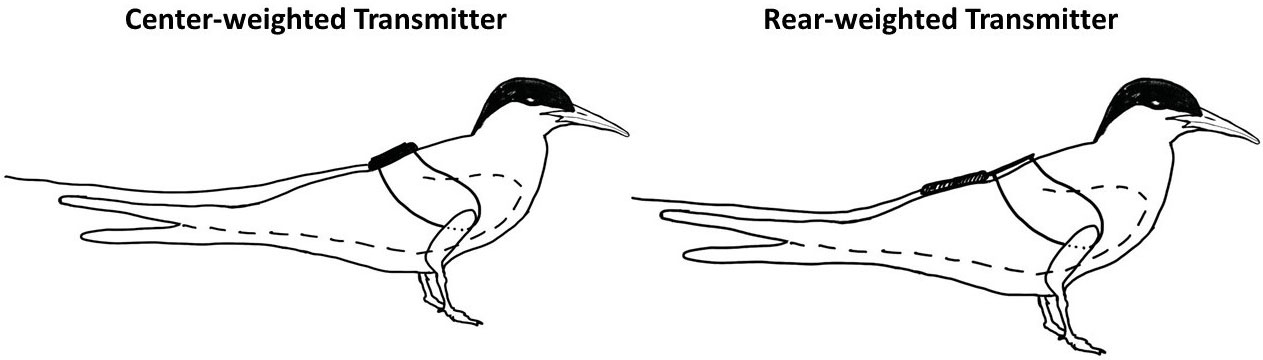
Fig. 1. Radio-transmitter types used in this study. Transmitters were attached to Common Terns (Sterna hirundo) via leg-loop harnesses made of 1 mm elastic cord following the methods of Buck et al. (2022a). Images depict adults, but rear-weighted transmitters were also applied to juveniles in the same manner; center-weighted transmitters were not attached to juveniles because of the higher tag mass. This figure was originally published in Buck et al. (2022a).
Fig. 2
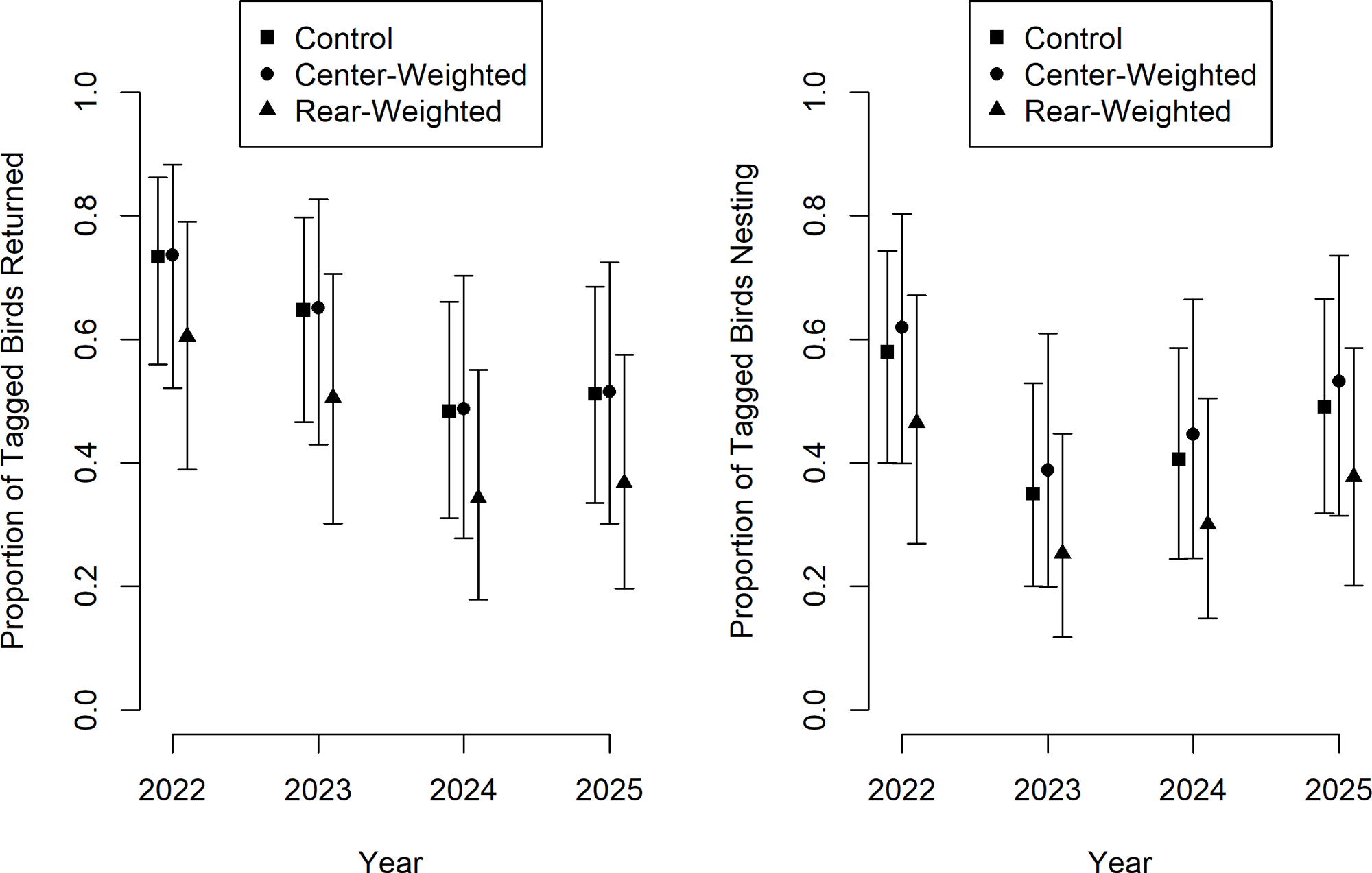
Fig. 2. The mean values and 95% highest posterior density intervals (HPDI) for the return rate (left) and nesting rate (right) during the 2022 through 2025 breeding seasons of Common Terns (Sterna hirundo) tagged as adults with transmitters on Poplar Island in 2021 as a function of year and tag type.
Fig. 3
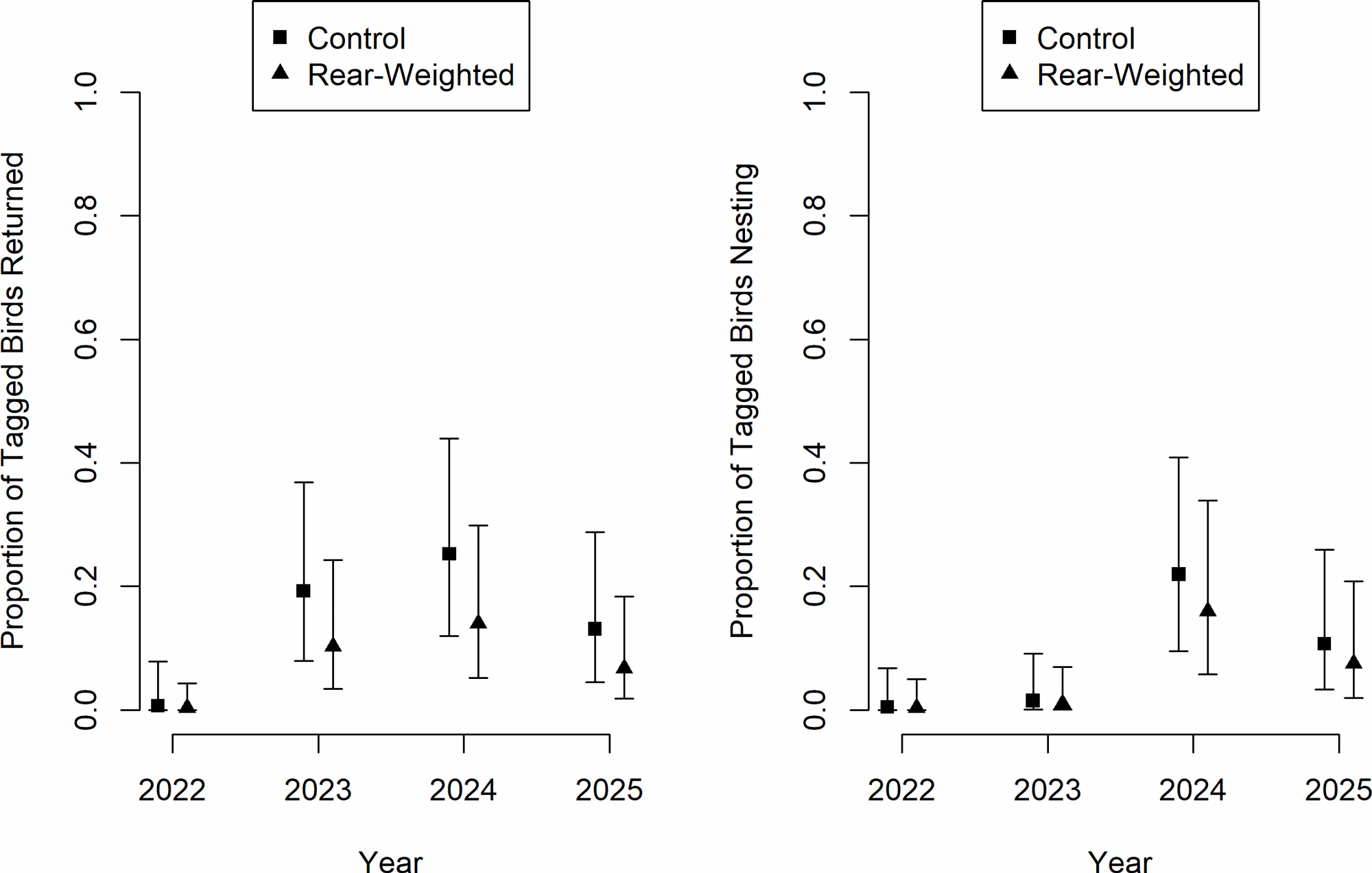
Fig. 3. The mean values and 95% highest posterior density intervals (HPDI) for the return rate (left) and nesting rate (right) during the 2022 through 2025 breeding seasons of Common Terns (Sterna hirundo) tagged as juveniles with transmitters on Poplar Island in 2021 as a function of year and tag type. Calculations exclude individuals known to have been depredated prior to fledging.
Table 1
Table 1. The number of Common Terns (Sterna hirundo) per age class and treatment type reported in this study.
| Age | Tag type | Number of birds | |||||||
| Adult | Control | 18 | |||||||
| Center-weighted | 8 | ||||||||
| Rear-weighted | 10 | ||||||||
| Juvenile | Control | 20 | |||||||
| Rear-weighted | 18† | ||||||||
| † An additional three individuals were marked with rear-weighted transmitters but were depredated by herons prior to fledging. As such they are excluded from calculations in this study. | |||||||||
Table 2
Table 2. Coefficient estimates, reported in logit scale, derived from binomial generalized linear models with logistic priors (location parameter of 0 and a scale parameter of 1). We reported coefficient estimates as posterior medians with 95% highest posterior density intervals (HPDI) and we estimated the probability of support for each reported effect by calculating the proportion of posterior samples in which the coefficient was estimated in a given direction.
| Model | Parameter | Median | 95% HPDI | Directional proportion | |||||
| Adult - return rate |
Year - 2022 | 0.61 | -0.01; 1.23 | +97.6 | |||||
| Year - 2023 | 0.21 | -0.37; 0.79 | +75.8 | ||||||
| Year - 2024 | -0.47 | -1.04; 0.12 | -94.5 | ||||||
| Year - 2025 | -0.35 | -0.94; 0.21 | -88.7 | ||||||
| Treatment - center-weighted transmitter | 0.01 | -0.81; 0.87 | +51.0 | ||||||
| Treatment - rear-weighted transmitter | -0.59 | -1.38; 0.18 | -93.2 | ||||||
| Adult - nesting rate | Year - 2022 | 0.50 | -0.07; 1.10 | +95.4 | |||||
| Year - 2023 | -0.44 | -1.02; 0.16 | -93.0 | ||||||
| Year - 2024 | -0.20 | -0.79; 0.37 | -74.9 | ||||||
| Year - 2025 | 0.14 | -0.43; 0.71 | +68.9 | ||||||
| Treatment - center-weighted transmitter | 0.17 | -0.63; 1.02 | +65.9 | ||||||
| Treatment - rear-weighted transmitter | -0.46 | -1.25; 0.32 | -87.4 | ||||||
| Juvenile - return rate | Year - 2022 | -2.46 | -5.23; -0.50 | -99.9 | |||||
| Year - 2023 | 0.88 | -0.18; 2.03 | +95.9 | ||||||
| Year - 2024 | 1.24 | 0.23; 2.37 | +99.5 | ||||||
| Year - 2025 | 0.45 | -0.68; 1.63 | +79.2 | ||||||
| Treatment - rear-weighted transmitter | -0.71 | -1.76; 0.28 | -92.5 | ||||||
| Juvenile - nesting rate | Year - 2022 | -1.95 | -5.07; 0.27 | -97.4 | |||||
| Year - 2023 | -0.87 | -2.84; 0.89 | -84.9 | ||||||
| Year - 2024 | 1.92 | 0.75; 3.31 | +100 | ||||||
| Year - 2025 | 1.08 | -0.17; 2.51 | +96.3 | ||||||
| Treatment - rear-weighted transmitter | -0.38 | -1.55; 0.75 | -74.6 | ||||||