


The following is the established format for referencing this article:
Rigley, B., A. L. Scarpignato, D. Luther, and A. E. M. Johnson. 2026. GPS tracking of Eastern Meadowlarks suggests partial migration, seasonal habitat shifts, and critical use of private lands. Journal of Field Ornithology 97(4):5.ABSTRACT
Grassland birds are among the most rapidly declining avian groups in North America, yet many aspects of their non-breeding ecology remain poorly understood. We used high-resolution GPS tracking to investigate migratory behavior and seasonal habitat use in Eastern Meadowlarks (Sturnella magna) breeding in Virginia. We deployed 35 GPS-Argos tags, but because of transmission failures, we obtained usable tracking data from 14 individuals. In total, we collected 185 locations across these individuals, of which 176 were retained after filtering out failed and invalid fixes. Most meadowlarks exhibited short distance migration to wintering areas in the southeastern USA, whereas one remained resident year-round, suggesting a mixed migratory strategy within the population. Resource selection modeling revealed that meadowlarks selected grassland habitats during both seasons, although selection was substantially weaker in winter. Relative selection odds associated with grassland cover were approximately 11.25 times higher during summer, and declined to 2.10 times higher during winter, as meadowlarks made greater use of croplands and mixed habitats. This seasonal shift in habitat use may reflect changing food availability and vegetation structure. Nearly all GPS locations occurred on private lands, underscoring the critical role of private land owners and managers in conserving this declining species.
RESUMEN
Las aves de pastizal se encuentran entre los grupos de aves de mayor velocidad de declive en América del Norte, sin embargo, muchos aspectos de su ecología durante los periodos no reproductivos permanecen aun son poco conocidos. Utilizamos seguimiento mediante GPS de alta resolución para investigar comportamiento migratorio y uso estacional de hábitat en individuos de Sturnella magna que se reproducen en Virginia. Instalamos 23 dispositivos GPS-Argos, pero debido a fallas en la transmisión, obtuvimos datos de seguimiento utilizables solo de 14 individuos. A partir de estas aves recolectamos 185 localizaciones, 176 fueron retenidas luego de filtrar y eliminar posiciones fallidas o inválidas. La mayoría de los individuos de S. magna exhibieron migraciones de corta distancia hacia áreas de invernada en el sudeste de Estados Unidos, mientras que uno permaneció residente durante todo el año, indicando una estrategia migratoria mixta dentro de la población. El modelado de selección de recursos reveló que S. magna prefirieron consistentemente pastizales a lo largo de las estaciones, presentando una probabilidad de utilización más del doble en comparación con otros tipos de cobertura del suelo disponibles. Sin embargo, la fuerza de la selección de pastizales declinó durante el invierno, cuando las aves también hicieron un mayor uso de cultivos y hábitats mixtos. Este cambio estacional en el uso del hábitat podría reflejar variaciones en la disponibilidad de alimento y en la estructura de la vegetación. Casi todas las localizaciones de GPS correspondieron a tierras privadas, subrayando el critico rol de los propietarios y administradores en la conservación de esta especie en declive.
INTRODUCTION
Migratory birds are remarkable in their ability to traverse vast distances, connecting ecosystems across states, countries, and even continents, while facing a multitude of natural and human-induced pressures. Natural and anthropogenic pressures can operate at both temporal and spatial scales and influence an individual bird’s condition, survival, and breeding performance (Clausen and Clausen 2013, Cooper et al. 2015, Kellermann and van Riper 2015, Cabrera-Cruz et al. 2018, Byrd et al. 2024, Boyd et al. 2025). To effectively manage and conserve populations of migratory birds across full annual cycles, it is essential to gain insights into their patterns of movement and habitat use. Monitoring population-specific migratory patterns can offer valuable insights into how pressures such as climate change and disturbances in local habitats affect the stability of populations (Iwamura et al. 2013, Studds et al. 2017, Kramer et al. 2018, Morrick et al. 2022, Knight et al. 2025). Such insights also make it possible to track population trends over time, allowing conservation efforts to be directed toward safeguarding critical habitats and addressing the specific challenges different species face (Marra et al. 2015). However, such data are frequently unavailable for numerous species, impeding efforts to implement successful management strategies.
Grassland birds are confronting severe anthropogenic pressures as their habitats are rapidly diminishing because of agricultural expansion, urban development, and other human-induced landscape changes (Askins 1999, Brennan and Kuvlesky 2005, Barzan et al. 2021). Notably, grassland birds are experiencing steeper population declines as a group than birds in any other biome in North America, making effective conservation efforts increasingly critical (Rosenberg et al. 2019). The Eastern Meadowlark (Sturnella magna), an iconic indicator species of grassland habitats, has declined by more than 70% in the last 50 years (Rosenberg et al. 2019). The Eastern Meadowlark is listed as “Near Threatened” by the International Union for Conservation of Nature (IUCN) and as a Tier 4 Species of Moderate Conservation Need by the Virginia Department of Wildlife Resources, reflecting broader conservation concern for the species across its mid-Atlantic breeding range and underscoring the urgency of understanding the ecological factors driving its decline (BirdLife International 2020, Peele et al. 2025). Continued monitoring efforts have sought to identify effective conservation strategies to support meadowlarks and other grassland-dependent birds throughout their range, which often includes agricultural lands such as pastures and hayfields, as well as native prairies and grasslands (Rahmig et al. 2009, Ahlering and Merkord 2016, Cassidy and Kleppel 2017, Fern et al. 2020). Although these monitoring protocols allow researchers to quantify occupancy, diversity, and abundance of grassland birds, these efforts focus primarily on the breeding season, leaving other crucial parts of the annual cycle less understood, and therefore limiting population-specific inference beyond the breeding season (Marra et al. 2015).
As it stands, the knowledge of meadowlark behavior outside of the breeding season remains limited. For instance, Eastern Meadowlarks are regularly observed in Virginia during the non-breeding winter months, but it remains unknown whether those birds are year-round residents or an influx of short-distance migrants shifting down from northern populations (Johnson et al. 2019, Jaster et al. 2022). In other species, migratory behavior and patterns have been successfully elucidated using GPS and satellite technology that tracks movement patterns of individuals throughout the year (Ng et al. 2018, Scarpignato et al. 2021). To our knowledge, only one study has sought to address questions about the movements of Eastern Meadowlarks across the year, but technical issues with GPS tags and data collection restricted their ability to draw comprehensive conclusions (Hill and Renfrew 2018). These persistent gaps in knowledge highlight the need to better understand meadowlark movement ecology, particularly given their role as an indicator of grassland condition and their utility as a surrogate for other grassland birds that are often too small to carry GPS devices. As such, quantifying meadowlark behavior, migratory patterns, and habitat use across the annual cycle can offer important insights into the key challenges and potential bottlenecks contributing to grassland bird decline. In turn, this information can substantiate more targeted and effective conservation strategies to support population recovery throughout the year.
In this study, we use high-resolution GPS tracking data from Eastern Meadowlarks to investigate four key questions: (1) Are Virginia meadowlark populations migratory? (2) Does habitat use shift between winter (November–February) and summer (April–August)? (3) To what extent do Eastern Meadowlarks select grassland habitats relative to other available habitat types? And (4) does this selection vary by season? We hypothesized that meadowlarks would rely less on grassland habitat and would instead use a broader range of open habitats during winter, a time when energetic demands are high and territorial constraints are reduced. In contrast, we expected more selective use of grasslands and hayfields during the breeding season. We also predicted that Eastern Meadowlarks would exhibit positive selection for grassland habitats relative to other available habitat types across both summer and winter seasons, but that the strength of this selection would be lower in winter because of broader habitat use. This shift likely reflects both ecological constraints and behavioral adaptations. During the breeding season, meadowlarks have a diet focused on insects to provision their young, and they tend to establish specific breeding sites and territories (Hubbard et al. 2006, Ostrand and Bollinger 2012, Jaster et al. 2022). Territorial behavior can further restrict habitat flexibility by increasing competition for suitable space (Both and Visser 2000). In addition, we aimed to summarize key descriptive patterns, including migration distances and timing, and to quantify the proportion of GPS locations occurring on private versus public lands to better understand land ownership context for conservation planning.
METHODS
We deployed 35 Argos-GPS tracking devices (hereafter “tags”) on Eastern Meadowlarks that were captured on four private working farms during the spring seasons in the Piedmont and Shenandoah regions of Virginia. Capture sites were grouped into two primary study areas on the basis of geographic clustering: Warren and Rappahannock County Farms (WRF, n = 18) and Fauquier County Farms (FQF, n = 17). Farms were selected on the basis of documented breeding activity and ongoing monitoring efforts through Virginia Working Landscapes (VWL), a program of the Smithsonian’s National Zoo and Conservation Biology Institute that supports native biodiversity conservation and sustainable land management through research partnerships. We prioritized sites with active monitoring to maximize the likelihood of re-sighting tagged individuals during the following spring, when birds were likely to return to the same location. Birds were captured on their breeding grounds during April and May from 2021 to 2023 in fields dominated by cool season, non-native grasses managed for pasture forage or hay production. The general landscape around the study area is composed of approximately 52% deciduous forest, 34% pasture and hay, and 11% developed or urban land (USGS 2024). The study area represents a typical Virginia working landscape, characterized by a mosaic of agricultural lands interspersed with forests and shrublands.
Meadowlark capture
Eastern Meadowlarks were captured using 38 mm mesh mist nets and conspecific attraction tactics, including hand-painted decoy meadowlarks and vocalization recordings to simulate presence. Immediately upon capture, birds were carefully removed from the nets and placed in soft cotton bird bags. Individuals were banded with an aluminum U.S. Geological Survey band and a unique band combination consisting of up to three plastic color bands. Morphological data such as breeding status, mass, wing length, and fat score were recorded for each individual. All birds were classified as after-hatch year (AHY) as age could not be determined because of the species’ complete molt strategy. Individuals weighing over 105 g were fitted with Lotek Argos-GPS pinpoint tags with reinforced antennas (~4 g; 4.2–4.3 g with leg-loop harness, < 4% of bird body mass). Only male Eastern Meadowlarks were tagged, as all captured females fell below the minimum weight threshold for tag deployment. All tags were attached using a leg-loop harness (Rappole and Tipton 1991). The harnesses were made of 1.0 mm polyurethane elastic bead cord and 1.8 mm crimp beads, with the goal that each tag would remain attached for an entire year. Harnesses were prepared in advance and were custom-fitted to each bird upon capture. All capturing and tagging procedures complied with guidelines established by the Smithsonian’s Institutional Animal Care and Use Committee (IACUC, #SI-22014).
The GPS tags were capable of storing up to 60 GPS fixes, each with an approximate accuracy of 10 m (Lotek Wireless Inc., personal communication). To prioritize data collection throughout the full annual cycle, we programmed tags to record one location weekly for a full year, from 15 July through to the following June. Locations were relayed to the Argos satellite network after every third successful GPS fix, or at the conclusion of the GPS schedule. When necessary, efforts were made in subsequent years to recover tags for the purpose of retrieving archived data that may not have transmitted, or to remove tags that were done transmitting. This was done by monitoring field sites in early spring to detect the return of tagged meadowlarks and target netting within their territories. These efforts were facilitated by concurrent research activities on properties, which allowed for monitoring of focal fields and surrounding areas from April until July.
Data analysis
We collected a total of 185 GPS and Argos location points across 14 individual Eastern Meadowlarks between 2021 and 2025. During data preparation, we filtered out all GPS fixes that failed the Cyclic Redundancy Check (CRC) and could not be corrected, which included unusable “A0” fix types (the lowest quality Argos fix class, with no estimated location accuracy). To increase our sample size, we included Argos-derived locations, but excluded any records where no valid fix was obtained. After filtering, we retained 176 usable points (Table 1), including 112 “3D” and 44 “3” GPS fixes, which represent high quality locations obtained using four or more satellites. Additional Argos points included two “2D” fixes (lower quality locations from only three satellites), five “A1” fixes (Argos locations with relatively strong Doppler signal quality), six “A2” fixes (moderate quality Argos fixes), five “A3” fixes, and two “AA” fixes (lower confidence Argos locations).
We classified satellite locations (GPS and Argos) as “summer” points if they were clustered on the breeding grounds where individuals were originally captured. “Winter” points for migratory individuals were defined as those located at least 20 km away from the summer cluster. In the case of one bird that remained resident year-round, we classified winter points on the basis of timing, defining the winter period as 29 October to 3 March, which corresponded to the mean fall and spring migration dates observed among migratory individuals. We combined data across years for all remaining analyses. Because GPS fixes (> 10 m accuracy) were well matched to the 30 m resolution of the GAP National Terrestrial Ecosystems dataset and the Protected Areas Database of the United States, whereas Argos fixes (≤ 250 m accuracy) were significantly coarser, we considered the potential for spatial mismatch between Argos fixes and land cover resolution. We retained Argos locations to increase sample size but limited inference to broad habitat classes that typically occur at scales larger than Argos error. Grassland and agricultural patches often extend hundreds of meters or more, and are frequently contiguous under single ownership; therefore, we determined that misclassification risk of Argos fixes was minimal. Accordingly, Argos fixes were considered suitable for coarse habitat use analysis.
We evaluated two techniques for estimating home range; kernel density estimates (KDEs) and minimum convex polygons (MCPs). KDEs typically require ≥ 30-50 locations per individual (Seaman et al. 1999, Borger et al. 2006, Iverson et al. 2024), but our dataset averaged 8.33 points (SD = 6.2) per individual in summer and 6.91 points (SD = 5.2) in winter, rendering KDEs inappropriate. MCPs were also unsuitable, as sparse and uneven data produced inflated and unrealistic home range estimates. Therefore, we treated each GPS and Argos location (hereafter, points) as an empirical observation of habitat use (Manly et al. 2001).
Land cover characteristics were then extracted for both the original point and the associated random points using the 2011 GAP National Terrestrial Ecosystems dataset (U.S. Geological Survey [USGS] Gap Analysis Project [GAP] 2011). We reclassified the original GAP land cover classes into broader habitat categories that align with the ecological scale of meadowlark habitat use, grouping into four general classes: (1) open habitat, (2) forest, (3) urban/disturbed/barren, and (4) water. Within the open habitat category, we further distinguished between grassland and cropland. Pasture & Hay Field Crop, Atlantic & Gulf Coastal Plain Marsh, Wet Prairie & Shrubland, and Temperate & Boreal Atlantic Coastal Salt Marsh were consolidated into a single grassland category. Herbaceous Agricultural Vegetation was retained separately and classified as cropland. Land ownership (public versus private) was assigned to points using the 2024 Protected Areas Database of the United States (PAD-US; U.S. Geological Survey [USGS] Gap Analysis Project [GAP] 2024). For locations classified as Herbaceous Agricultural Vegetation in the primary land cover dataset, we used the United States Department of Agriculture (USDA) National Agricultural Statistics Service Cropland Data Layer to further characterize crop type for the year each location was recorded (U.S. Department of Agriculture [USDA] National Agricultural Statistics Service 2024). This layer was derived from aerial imagery analysis and provided additional resolution on the types of agricultural habitats used by meadowlarks.
To assess seasonal differences in grassland use by Eastern Meadowlarks, we fit a generalized linear mixed effects model with a binomial error distribution and logit link. The response variable was a binary indicator of whether each GPS location occurred in grassland habitat, on the basis of land cover data. We included a random intercept for each individual bird to account for repeated measures across birds. This approach allowed us to estimate the overall probability of grassland use while accounting for individual variation in habitat use, and controlling for unbalanced sampling across birds.
To assess habitat selection by Eastern Meadowlarks, we used a use-availability design comparing land cover characteristics at locations (“used” points) to random points (“available” points; Manly et al. 2001). We generated 10-km buffers (“available”) around all locations and grouped and merged buffers by individuals and season to produce a set of non-overlapping, season-specific available areas for each bird. We generated 100 random points within each polygon and quantified habitat availability using the same land cover reclassification approach described above. We fit a suite of generalized linear models (GLMs) with a binomial response (1 = used, 0 = available) to test whether the probability of habitat use was influenced by either grassland or cropland cover, and whether these effects varied by season. Candidate models included (1) habitat (grassland or crop), (2) habitat + season (summer or winter), and (3) habitat × season interaction. Competing models were ranked using Akaike’s Information Criterion (AIC; Burnham et al. 2011). This approach is equivalent to a resource selection function (RSF), where positive coefficients indicate selection and negative coefficients indicate avoidance (Boyce et al. 2002). Model fit was assessed using residual diagnostics and overdispersion tests, which indicated no violations of model assumptions.
RESULTS
Fourteen of the 35 GPS tags (40%) successfully transmitted usable data. Tracking durations varied considerably among the 14 tags that transmitted data in all years (Fig. 1). Most tags provided data across multiple consecutive weeks, though intermittent data gaps were observed in several cases. Four individuals yielded location data for 20 or more weeks, and one bird was tracked continuously from week 36 of one year through week 12 of the following year, representing the most complete migration-to-wintering season dataset.
Of the 14 Eastern Meadowlarks whose tags transmitted data, we identified a mixed migratory strategy: eight individuals exhibited migratory behavior, whereas one remained resident year-round (Table 1). The remaining five individuals transmitted insufficient data across seasons to reliably determine their migratory status. The timing of migration, though constrained by the programmed duty cycle and resulting temporal resolution of the GPS data, suggests that fall migration occurred between 14 October and 17 November (mean = 29 October ± 10.7 days, n = 5), while spring migration took place between 24 February and 15 March (mean = 3 March ± 6.9 days, n = 3; Table 1). Migratory individuals traveled an average distance of 318 km (± 97.8), relocating to wintering areas across Maryland, Virginia, and North Carolina (Fig. 2). The mean maximum distance between winter points was 28.9 km (SD = 59.5 km) and the mean minimum distance between winter points was 2.1 km (SD = 6.4 km), indicating that most individuals traveled to at least some locations in close proximity, though the weekly sampling interval likely obscures the full extent of winter movement. The large standard deviations in maximum distance between winter points reflect individual variation, driven in part by two individuals (tags 201647 and 237368) with maximum winter distances exceeding 80 km and 183 km, respectively. This suggests that some birds made large movements within the winter period whereas others remained highly localized. Of the 35 tagged meadowlarks, five were resighted on breeding grounds the following spring, three of which were successfully recaptured. Resighted individuals were consistently observed within the same field, or within 300 m of their original capture location, providing preliminary evidence of breeding site fidelity. However, on the basis of GPS data, one individual returned to its original field of capture the following early spring, yet ultimately established a breeding territory approximately 800 m away, suggesting that initial settlement location may not always reflect breeding territory establishment.
During summer, the majority of Eastern Meadowlark locations occurred in Pasture and Hay Field Crop areas (89.9%), suggesting a high use of open agricultural habitats (Fig. 3). Smaller proportions of points were found in Cool Temperate Forest and Woodland (6.1%), Developed and Urban areas (2.0%), and both Herbaceous Agricultural Vegetation and Warm Temperate Forest and Woodland (1.0% each), indicating minimal use of forested or disturbed habitats during this season. Winter habitat use was broader and more variable than in summer. Whereas Pasture and Hay Field Crop (35.1%) remained a dominant habitat in winter, use of other habitat types increased compared to summer habitat use. Notably, use increased for Herbaceous Agricultural Vegetation (37.7%), Cool Temperate Forest and Woodland (7.8%), and Recently Disturbed or Modified areas (7.8%), as well as for Flooded and Swamp Forests (5.2% combined), Warm Temperate Forest and Woodland (3.9%), and Developed and Urban, and Open Water habitats (1.3% each). This suggests a broader range of habitat use in winter, including more forested and disturbed landscapes. Of the 29 winter points classified as Herbaceous Agricultural Vegetation, crop layer data indicated that 12 points (41%) occurred in corn fields, seven (24%) in soybean fields, nine (31%) in livestock or fallow areas, and one (3%) in cotton fields. Although tagged individuals were captured on private working hayfields and pastures during the breeding season, birds continued to use private lands throughout the year. In winter, 87.2% of points occurred on private lands, 10.3% of points occurred on state owned land, and 2.6% on federally managed land.
Seasonal habitat use differed significantly, with meadowlarks showing stronger association with grasslands in summer than in winter, though considerable variation existed among individuals (random intercept SD = 1.22). The model estimated a 3.16 ± 0.50 unit reduction in the log‐odds of grassland use in winter (p < 0.001), corresponding to an odds ratio of 0.042. Predicted probabilities indicated that meadowlarks used grassland habitats 91% ± 4% of the time in summer compared to only 32% ± 5% in winter, reflecting a pronounced seasonal decline in grassland association.
The top‐ranked RSF model included an interaction between grassland cover and season (AIC = 1172.9). Meadowlarks exhibited strong selection for grassland overall (β = 2.42 ± 0.34, p < 0.001), but this selection was significantly weaker in winter (grassland × winter interaction: β = -1.68 ± 0.42, p < 0.001). Predicted probabilities showed that in summer the odds of a location being selected increased more than tenfold with grassland cover, whereas in winter the strength of selection was reduced but remained positive (Fig. 4).
DISCUSSION
Our study provides new insight into the migratory behavior and seasonal habitat use of Eastern Meadowlarks in the mid-Atlantic region, revealing both individual variation in migratory distance and consistent seasonal reliance on grasslands on private working lands. Tracking suggests a mixed migratory strategy within the population, including one non-migratory resident, where migratory individuals traveled distances ranging from 213 km to 435 km. The drivers determining whether individuals migrate, and the distances they travel, remain unknown, but intraspecific differences in migratory behavior are common in many bird species. Partial migration is thought to arise through two primary mechanisms; one hypothesis proposes that it reflects a genetically based strategy, where individuals are either fixed as migrants or residents, whereas the other suggests that migration is a flexible, condition-dependent behavior shaped by environmental, physiological, and social cues (Lundberg 1987, 1988). Increasing evidence suggests that birds exhibit flexibility in their migratory behavior, with individual traits such as age, body condition, and energetic reserves often influencing the timing, distance, or likelihood of migration (Cooper et al. 2015, Deppe et al. 2015, Wobker et al. 2021, de Zwaan et al. 2022, Witczak et al. 2024, Boyd et al. 2025). Additionally, birds may exhibit flexibility to switch migratory strategies from year to year (Hegemann et al. 2015). In our study, low GPS transmission rates and limited variation in age and sex (only AHY males were tagged) constrained our ability to test potential predictors of migration distance or migratory tendency. As a result, we were unable to identify trait-based or environmental thresholds that may trigger migration, or explain why some individuals remain resident or migrate shorter distances (~200 km), whereas others travel farther (> 400 km). Consistent with Hill and Renfrew (2018), who deployed GPS-Argos tags on Eastern Meadowlarks and reported reduced data volume from some units, our results further highlight that tag-imposed limitations can constrain inference on migratory behavior. Determining the ecological or behavioral thresholds at which meadowlarks shift from residency to migration, and the cues driving that decision, will require targeted study of individual traits, environmental context, and their interactions across years.
Although Eastern Meadowlarks are well known for their association with open, grass-dominated landscapes, our results reveal pronounced seasonal differences in grassland use and selection. Analysis of used locations indicated that meadowlarks occupied grassland habitats more frequently during summer than in winter. Similarly, resource selection analyses demonstrated positive selection for grassland habitats relative to availability during both seasons, although the strength of selection was significantly weaker in winter. Meadowlarks exhibited an approximately 11.25-fold increase in relative selection odds associated with grassland cover during summer, compared to a 2.10-fold increase during winter. Together, these findings indicate that although grasslands remain an important component of meadowlark habitat throughout the year, their relative importance declines during winter, when meadowlarks use a broader range of habitats, including croplands and mixed habitats. The broader range of habitats used during winter may reflect seasonal changes in food or habitat availability, or preference. As invertebrate prey declines in grasslands during colder months, meadowlarks may shift to croplands where waste grain and weed seeds provide alternative foraging resources (Brickle and Harper 2000, Jaster et al. 2022). Additionally, management of grasslands may reduce structural cover and habitat suitability, prompting birds to seek shelter or forage in adjacent habitats. Johnson et al. (2019) observed that meadowlarks preferentially used areas with short vegetation and little overhead cover, consistent with our finding that meadowlarks occupy mixed open habitats during winter. Wilcoxen et al. (2018) further showed that Eastern Meadowlarks were more abundant in cover crop fields than in non-cover crop fields, indicating that cover crops can provide important foraging opportunities, and may help support populations during the non-breeding season. We also observed substantial individual variation in habitat use, indicating behavioral plasticity that may help buffer populations against environmental variability in heterogeneous landscapes (Boyce et al. 2002, Dingemanse et al. 2009).
Although these findings offer important ecological insights, they should be interpreted in light of several data limitations. GPS-Argos tags used in this study exhibited low data transmission rates, consistent with other tracking studies using these methods (Scarpignato et al. 2016, Hill and Renfrew 2018). Many tags failed to transmit the expected volume of data, resulting in reduced sample size and limited temporal resolution. This constrained our ability to fully characterize migration timing, behavior, and habitat use. Additionally, two tags were recovered but failed to yield data, despite manufacturer support and no visible damage to the units. The underlying causes of poor transmission may include factors such as battery depletion, antenna damage, and environmental conditions that inhibit signal acquisition (Scarpignato et al. 2016, Silva et al. 2017, Clements et al. 2021). Location accuracy of Argos fixes (≤ 250 m) was coarser than the spatial resolution of our land cover data, creating a potential mismatch in scale that may have increased the risk of habitat misclassification. However, Argos locations comprised a small proportion of the dataset (20 of the 176 retained fixes), and our analysis focused on broad habitat categories that occur at scales typically larger than Argos error. We consequently expect any resulting bias to be minimal and unlikely to affect overall patterns of habitat use.
Beyond technical constraints, several inferential limitations warrant consideration. The fate of individuals that did not return or transmit data remains unknown. Although no mortalities were confirmed during our study, we cannot distinguish between birds that died, or those that simply failed to transmit data. This uncertainty limits our ability to draw conclusions about survival rates or the consistency of breeding site fidelity across the population. Additionally, tagged individuals were captured on select working farms in Virginia, which may introduce selection bias if birds using these sites differ from those in other parts of the region, particularly in more fragmented or heavily disturbed landscapes. Thus, our results may not fully reflect the behavior of the broader Eastern Meadowlark population. Future studies would benefit from incorporating more reliable tracking technology, larger and more geographically diverse sample sizes, and complementary resighting or banding programs to better resolve individual fates and improve population-level inference.
CONCLUSION
The near-exclusive use of private agricultural lands across both seasons underscores the extent to which Eastern Meadowlark conservation in the mid-Atlantic is fundamentally a working lands challenge. With minimal use of public lands detected in our study, effective conservation will depend on incentive-based programs and cooperative management strategies that promote habitat availability and quality on agricultural landscapes (Ciuzio et al. 2013). Given that many declining grassland birds depend heavily on privately managed hayfields, pastures, and crop rotations, our findings align with broader evidence that agricultural working lands represent critical conservation leverage points for grassland bird persistence in the eastern U.S. (North American Bird Conservation Initiative, U.S. Committee 2013). With grassland bird populations in accelerating decline across North America, the window for effective intervention is narrowing, and successful recovery will depend on integrating conservation practices into working agricultural landscapes at a scale commensurate with the magnitude of that loss (Pavlacky et al. 2021, Leroy et al. 2026). Ultimately, our results support reframing working lands not as antagonists to grassland birds, but as powerful and flexible management levers that, when calibrated to meet seasonal habitat needs, can meaningfully contribute to the recovery of grassland bird populations.
RESPONSES TO THIS ARTICLE
Responses to this article are invited. If accepted for publication, your response will be hyperlinked to the article. To submit a response, follow this link. To read responses already accepted, follow this link.
ACKNOWLEDGMENTS
We thank the landowners, producers, and land managers for generously providing access to their properties to support this study and whose support made this work possible. We would also like to thank our colleagues, interns, and students who contributed their time and effort to this study, including Valentine Herrmann, Nick Garnhart, Erica Royer, Erin Shibley, and Chris Rademacher. This work was made possible through generous support from Beatrice and Adie von Gontard, the Band Foundation, Kathryn and Tony Everett, Katherine McLeod Charitable Fund, the Jacquemin Family Foundation, Friends of the National Zoo, Conservation Nation, the Volgenau Foundation, the Roger Jones Memorial Fund, and from support by the Migratory Connectivity Project through funding from the ConocoPhillips Charitable Investments Global Signature Program.
DATA AVAILABILITY
The data supporting the findings of this study is available at https://doi.org/10.6084/m9.figshare.34881450. Ethical approval for this research study was granted by the Smithsonian Institute (IACUC, #SI-22014).
LITERATURE CITED
Ahlering, M. A., and C. L. Merkord. 2016. Cattle grazing and grassland birds in the northern tallgrass prairie. Journal of Wildlife Management 80:643-654. https://doi.org/10.1002/jwmg.1049
Askins, R. A. 1999. History of grassland birds in eastern North America. Studies in Avian Biology 19:60-71.
Barzan, F. R., L. M. Bellis, and S. Dardanelli. 2021. Livestock grazing constrains bird abundance and species richness: a global meta-analysis. Basic and Applied Ecology 56:289-298. https://doi.org/10.1016/j.baae.2021.08.007
BirdLife International. 2020. Sturnella magna. The IUCN Red List of Threatened Species 2020. IUCN Red List of Threatened Species. https://dx.doi.org/10.2305/IUCN.UK.2020-3.RLTS.T22735434A179984605.en
Borger, L., N. Franconi, G. De Michele, A. Gantz, F. Meschi, A. Manica, S. Lovari, and T. Coulson. 2006. Effects of sampling regime on the mean and variance of home range size estimates. Journal of Animal Ecology 75:1393-1405. https://doi.org/10.1111/j.1365-2656.2006.01164.x
Both, C., and M. E. Visser. 2000. Breeding territory size affects fitness: an experimental study on competition at the individual level. Journal of Animal Ecology 69:1021-1030. https://doi.org/10.1111/j.1365-2656.2000.00458.x
Boyce, M. S., P. R. Vernier, S.E . Nielsen, and F. K. A. Schmiegelow. 2002. Evaluating resource selection functions. Ecological Modelling 157:281-300. https://doi.org/10.1016/S0304-3800(02)00200-4
Boyd, B. P., S. M. Hayes, A. A. Migotto, and B. J. M. Stutchbury. 2025. Age-related differences in fall migration timing and performance of juvenile and adult Wood Thrushes departing from a breeding site. Movement Ecology 13:32. https://doi.org/10.1186/s40462-025-00556-3
Brennan, L. A., and W. P. Kuvlesky. 2005. North American grassland birds: an unfolding conservation crisis? Journal of Wildlife Management 69(1):1-13. https://doi.org/10.2193/0022-541X(2005)069%3C0001:NAGBAU%3E2.0.CO;2
Brickle, N. W., and D. G. C. Harper. 2000. Habitat use by Corn Buntings Miliaria calandra in winter and summer. Pages 156-164 in N. J. Aebischer, A. D. Evans, P. V. Grice, and J. A. Vickery, editors. Ecology and conservation of lowland farmland birds. British Ornithologists’ Union, Tring, UK.
Burnham, K. P., D. R. Anderson, and K. P. Huyvaert. 2011. AIC model selection and multimodel inference in behavioral ecology: some background, observations, and comparisons. Behavioral Ecology and Sociobiology 65:23-35. https://doi.org/10.1007/s00265-010-1029-6
Byrd, A. J., K. M. Talbott, T. M. Smiley, T. B. Verrett, M. S. Gross, M. L. Hladik, E. D. Ketterson, and D. J. Becker. 2024. Determinants of spring migration departure dates in a New World sparrow: weather variables reign supreme. Ecology and Evolution 14:e10874. https://doi.org/10.1002/ece3.10874
Cabrera-Cruz, S. A., J. A. Smolinsky, and J. J. Buler. 2018. Light pollution is greatest within migration passage areas for nocturnally-migrating birds around the world. Scientific Reports 8:3261. https://doi.org/10.1038/s41598-018-21577-6
Cassidy, L. R., and G. Kleppel. 2017. The effect of grazing regime on grassland bird abundance in New York state. Northeastern Naturalist 24:86-98. https://doi.org/10.1656/045.024.0sp807
Ciuzio, E., W. L. Hohman, B. Martin, M. D. Smith, S. Stephens, A. M. Strong, and T. Vercauteren. 2013. Opportunities and challenges to implementing bird conservation on private lands. Wildlife Society Bulletin 37:267-277. https://doi.org/10.1002/wsb.266
Clausen, K. K., and P. Clausen. 2013. Earlier arctic springs cause phenological mismatch in long–distance migrants. Oecologia 173:1101-1112. https://doi.org/10.1007/s00442-013-2681-0
Clements, S. J., B. M. Ballard, G. R. Eccles, E. A. Sinnott, and M. D. Weegman. 2021. Trade-offs in performance of six lightweight automated tracking devices for birds. Journal of Field Ornithology 92:506-517. https://doi.org/10.1111/jofo.12392
Cooper, N. W., T. W. Sherry, and P. P. Marra. 2015. Experimental reduction of winter food decreases body condition and delays migration in a long-distance migratory bird. Ecology 96:1933-1942. https://doi.org/10.1890/14-1365.1
de Zwaan, D. R., A. Huang, Q. McCallum, K. Owen, M. Lamont, and W. Easton. 2022. Mass gain and stopover dynamics among migrating songbirds are linked to seasonal, environmental, and life-history effects. Ornithology 139(4):ukac027. https://doi.org/10.1093/ornithology/ukac027
Deppe, J. L., M. P. Ward, R. T. Bolus, R. H. Diehl, A. Celis-Murillo, T. J. Zenzal Jr., F. R. Moore, T. J. Benson, J. A. Smolinisky, L. N. Schofield, D. A. Enstrom, E. H. Paxton, G. Bohrer, T. A. Beveroth, A. Raim, R. L. Obringer, D. Delaney, and W. W. Cochran. 2015. Fat, weather, and date affect migratory songbirds’ departure decisions, routes, and time it takes to cross the Gulf of Mexico. Proceedings of the National Academy of Sciences 112:E6331-E6338. https://doi.org/10.1073/pnas.1503381112
Dingemanse, N. J., A. J. N. Kazem, D. Réale, and J. Wright. 2009. Behavioural reaction norms: animal personality meets individual plasticity. Trends in Ecology & Evolution 25:81-89. https://doi.org/10.1016/j.tree.2009.07.013
Fern, R. R., M. L. Morrison, W. E. Grant, H. Wang, and T. A. Campbell. 2020. Modeling the influence of livestock grazing pressure on grassland bird distributions. Ecological Processes 9:42. https://doi.org/10.1186/s13717-020-00244-7
Hegemann, A., P. P. Marra, and B. I. Tieleman. 2015. Causes and consequences of partial migration in a passerine bird. American Naturalist 186(4):531-546. https://doi.org/10.1086/682667
Hill, J. M., and R. B. Renfrew. 2018. Migratory patterns and connectivity of two North American grassland bird species. Ecology and Evolution 9:680-692. https://doi.org/10.1002/ece3.4795
Hubbard, R. D., D. P. Althoff, K. A. Blecha, B. A. Bruvold, and R. D. Japuntich. 2006. Nest site characteristics of eastern meadowlarks and grasshopper sparrows in tallgrass prairie at the Fort Riley military installation, Kansas. Transactions of the Kansas Academy of Science 109(3):168-174. https://doi.org/10.1660/0022-8443(2006)109[168:NSCOEM]2.0.CO;2
Iverson, A. R., D. L. Humple, R. L. Cormier, T. P. Hahn, T. A. Block, D. Shizuka, B. E. Lyon, A. S. Chaine, E. J. Hudson, and E. M. Hull. 2024. Winter GPS tagging reveals home ranges during the breeding season for a boreal-nesting migrant songbird, the Golden-crowned Sparrow. PLoS ONE 19(6):e0305369. https://doi.org/10.1371/journal.pone.0305369
Iwamura, T., H. P. Possingham, I. Chadès, C. Minton, N. J. Murray, D. I. Rogers, E. A. Treml, and R. A. Fuller. 2013. Migratory connectivity magnifies the consequences of habitat loss from sea-level rise for shorebird populations. Proceedings of the Royal Society B: Biological Sciences 280(1761):20130325. https://doi.org/10.1098/rspb.2013.0325
Jaster, L. A., W. E. Jensen, W. E. Lanyon, and S. G. Mlodinow. 2022. Eastern Meadowlark (Sturnella magna), version 1.1. In P. Pyle, and N. D. Sly, editors. Birds of the world. Cornell Lab of Ornithology, Ithaca, New York, USA. https://doi.org/10.2173/bow.easmea.01.1
Johnson, A. E. M., T. S. Sillett, D. Luther, V. Herrmann, T. A. Akre, and W. J. McShea. 2019. Effects of grassland management on overwintering bird communities. Journal of Wildlife Management 83:1515-1526. https://doi.org/10.1002/jwmg.21730
Kellermann, J. L., and C. van Riper. 2015. Detecting mismatches of bird migration stopover and tree phenology in response to changing climate. Oecologia 178:1227-1238. https://doi.org/10.1007/s00442-015-3293-7
Knight, E. C., J. Carlisle, A. J. Boyce, D. Bradley, P. Cimprich, S. Coates, S. J. Dismore, C. J. Gregory, J. G. Jorgensen, J. F. Kelly, D. Newstead, A. Olalla, L. A. Powell, A. L. Scarpignato, T. L. Tibbitts, N. Warnock, W. Wehtje, P. P. Marra, and A.-L. Harrison. 2025. Delineating ecologically distinct groups for annual cycle management of a declining shorebird. Journal of Applied Ecology 62:1152-1165. https://doi.org/10.1111/1365-2664.14885
Kramer, G. R., D. E. Andersen, D. A. Buehler, P. B. Wood, S. M. Peterson, J. A. Lehman, K. R. Aldinger, L. P. Bulluck, S. Harding, J. A. Jones, J. P. Loegering, C. Smalling, R. Vallender, and H. M. Streby. 2018. Population trends in Vermivora Warblers are linked to strong migratory connectivity. Proceedings of the National Academy of Sciences 115(4):E3192-E3200. https://doi.org/10.1073/pnas.1718985115
Leroy, F., M. A. Jarzyna, and P. Keil. 2026. Acceleration hotspots of North American birds’ decline are associated with agriculture. Science 391(6788):917-921. https://doi.org/10.1126/science.ads0871
Lundberg, P. 1987. Partial bird migration and evolutionarily stable strategies. Journal of Theoretical Biology 125:351-360. https://doi.org/10.1016/S0022-5193(87)80067-X
Lundberg, P. 1988. The evolution of partial migration in Birds. Trends in Ecology & Evolution 125(3):172-175. https://doi.org/10.1016/0169-5347(88)90035-3
Manly, B. F., L. McDonald, D. L. Thomas, T. L. McDonald, and W. P. Erickson. 2001. Resource selection by animals: statistical design and analysis for field studies. Kluwer Academic, Norwell, Massachusetts, USA.
Marra, P. P., E. B. Cohen, S. R. Loss, J. E. Rutter, and C. M. Tonra. 2015. A call for full annual cycle research in animal ecology. Biology Letters 11(8):20150552. https://doi.org/10.1098/rsbl.2015.0552
Morrick, Z. N., A. Lilleyman, R. A. Fuller, R. Bush, J. T. Coleman, S. T. Garnett, Y. N. Gerasimov, R. Jessop, Z. Ma, G. Maglio, C. D. T. Minton, E. Syroechkovskiy, and B. K. Woodworth. 2022. Differential population trends align with migratory connectivity in an endangered shorebird. Conservation Science and Practice 4(1):e594. https://doi.org/10.1111/csp2.594
Ng, J. W., E. C. Knight, A. L. Scarpignato, A.-L. Harrison, E. M. Bayne, and P. P. Marra. 2018. First full annual cycle tracking of a declining aerial insectivorous bird, the Common Nighthawk (Chordeiles minor), identifies migration routes, nonbreeding habitat, and breeding site fidelity. Canadian Journal of Zoology 96:869-875. https://doi.org/10.1139/cjz-2017-0098
North American Bird Conservation Initiative, U.S. Committee. 2013. The state of the birds 2013 report on private lands. U.S. Department of Interior, Washington, D.C., USA.
Ostrand, S. L., and E. K. Bollinger. 2012. Nestling diet of Eastern Meadowlarks in east-central Illinois. Wilson Journal of Ornithology 124(2):399-402. https://doi.org/10.1676/11-128.1
Pavlacky, D. C., C. A. Hagen, A. M. Bartuszevige, R. Iovanna, T. L. George, and D. E. Naugle. 2021. Scaling up private land conservation to meet recovery goals for grassland birds. Conservation Biology 35:1564-1574. https://doi.org/10.1111/cobi.13731
Peele, A. M., M. Massa, R. W. Rohrbaugh, S. R. Harding, E. A. Hunter, K. J. Loope, D. A. Sommers, M. A. Thomas, and A. L. Kane. 2025. Virginia’s Second Breeding Bird Atlas (2016-2020). https://vabirdatlas.org/
Rahmig, C. J., W. E. Jensen, and K. A. With. 2009. Grassland bird responses to land management in the largest remaining tallgrass prairie. Conservation Biology 23(2):420-432. https://doi.org/10.1111/j.1523-1739.2008.01118.x
Rappole, J. H., and A. R. Tipton. 1991. New harness design for attachment of radio transmitters to small passerines. Journal of Field Ornithology 62:335-337. https://www.jstor.org/stable/20065798
Rosenberg, K. V., A. M. Dokter, P. J. Blancher, J. R. Sauer, A. C. Smith, P. A. Smith, J. C. Stanton, A. Panjabi, L. Helft, M. Parr, and P. P. Marra. 2019. Decline of the North American avifauna. Science 366(6461):120-124. https://doi.org/10.1126/science.aaw1313
Scarpignato, A. L., A.-L. Harrison, D. J. Newstead, L. J. Niles, R. R. Porter, M. van den Tilaart, and P. P. Marra. 2016. Field-testing a new miniaturized GPS-Argos satellite transmitter (3.5 g) on migratory shorebirds. Wader Study 123(3):240-246. https://doi.org/10.18194/ws.00046
Scarpignato, A. L., K. A. Stein, E. B. Cohen, P. P. Marra, L. J. Kearns, S. Hallager, and C. M. Tonra. 2021. Full annual cycle tracking of Black-crowned Night Herons suggests wintering areas do not explain differences in colony population trends. Journal of Field Ornithology 92:143-155. https://doi.org/10.1111/jofo.12369
Seaman, D. E., J. J. Millspaugh, B. J. Kernohan, G. C. Brundige, K. J. Raedeke, and R. A. Gitzen. 1999. Effects of sample size on kernel home range estimates. Journal of Wildlife Management 63(2):739-747. https://doi.org/10.2307/3802664
Silva, R., I. Afán, J. A. Gil, and J. Bustamante. 2017. Seasonal and circadian biases in bird tracking with solar GPS-tags. PLoS ONE 12(10):e0185344. https://doi.org/10.1371/journal.pone.0185344
Studds, C. E., B. E. Kendall, N. J. Murray, H. B. Wilson, D. I. Rogers, R. S. Clemens, K. Gosbell, C. J. Hassell, R. Jessop, D. S. Melville, D. A. Milton, C. D. T. Milton, H. P. Possingham, A. C. Riegen, P. Straw, E. J. Woehler, and R. A. Fuller. 2017. Rapid population decline in migratory shorebirds relying on Yellow Sea tidal mudflats as stopover sites. Nature Communications 8:14895. https://doi.org/10.1038/ncomms14895
U.S. Department of Agriculture (USDA) National Agricultural Statistics Service. 2024. US Cropland Data Layer. https://croplandcros.scinet.usda.gov/
U.S. Geological Survey (USGS) Gap Analysis Project (GAP). 2011. GAP/LANDFIRE National Terrestrial Ecosystems. U.S. Geological Survey data release. https://doi.org/10.5066/F7ZS2TM0
U.S. Geological Survey (USGS). 2024. Annual NLCD Collection 1 Science Products: U.S. Geological Survey data release. https://doi.org/10.5066/P94UXNTS
U.S. Geological Survey (USGS) Gap Analysis Project (GAP). 2024. Protected Areas Database of the United States (PAD-US) 4. Geological Survey data release. https://doi.org/10.5066/P96WBCHS
Wilcoxen, C. A., J. W. Walk, and M. P. Ward. 2018. Use of cover crop fields by migratory and resident birds. Agriculture, Ecosystems & Environment 252:42-50. https://doi.org/10.1016/j.agee.2017.09.039
Witczak, S., U. Kormann, M. Schaub, S. Oppel, and M. U. Grüebler. 2024. Sex and size shape the ontogeny of partial migration. Journal of Animal Ecology 93:406-416. https://doi.org/10.1111/1365-2656.14051
Wobker, J., W. Heim, and H. Schmaljohann. 2021. Sex, age, molt strategy, and migration distance explain the phenology of songbirds at a stopover along the East Asian flyway. Behavioral Ecology and Sociobiology 75:25. https://doi.org/10.1007/s00265-020-02957-3
Fig. 1
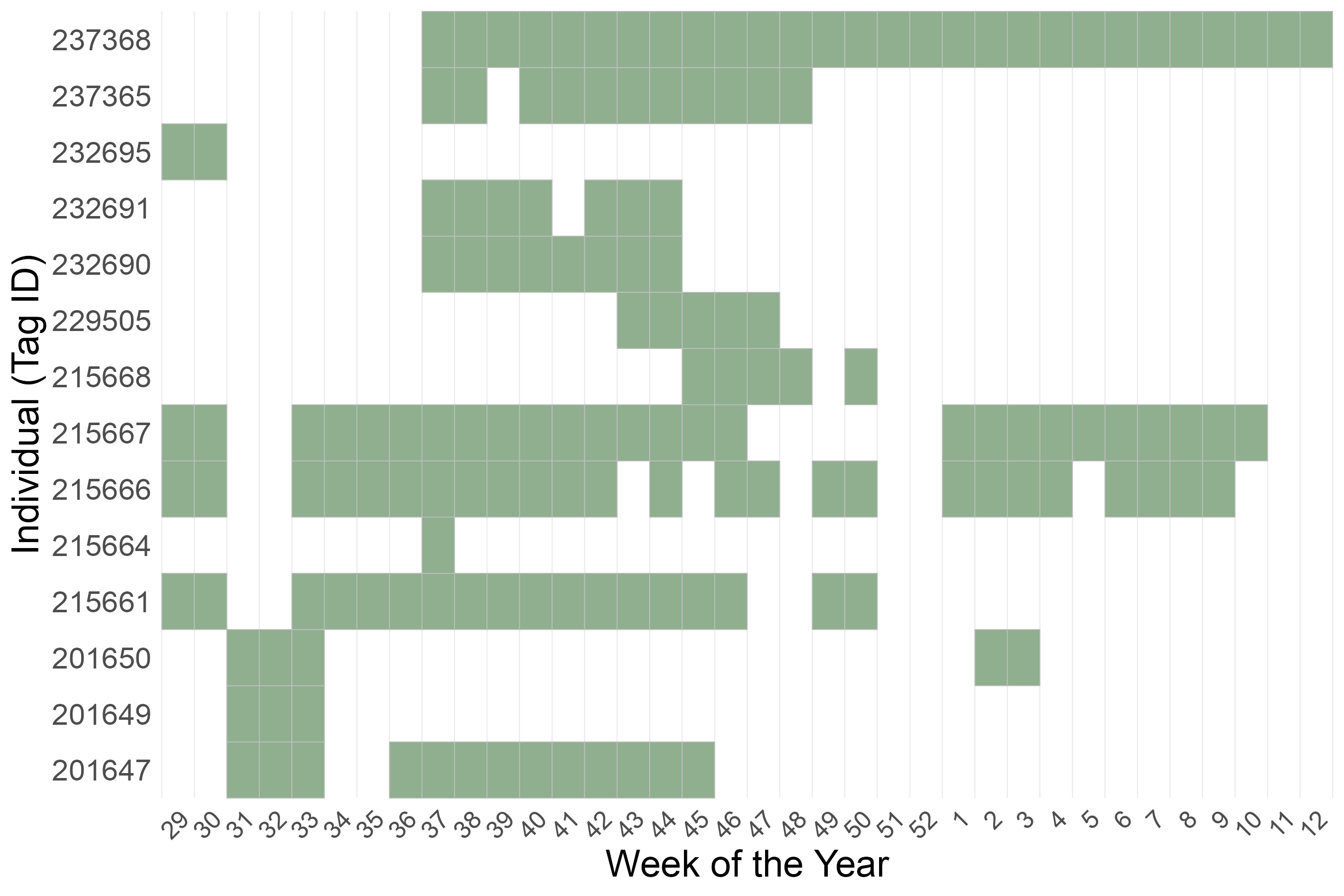
Fig. 1. Temporal distribution of satellite tracking data (176 points) across 14 eastern meadowlarks GPS-tagged at breeding grounds in Virginia, 2021–2024. GPS fixes were scheduled to collect one location per week, beginning in week 29 (July) and continuing through to the following June. No data were transmitted beyond week 12 of the subsequent year.
Fig. 2
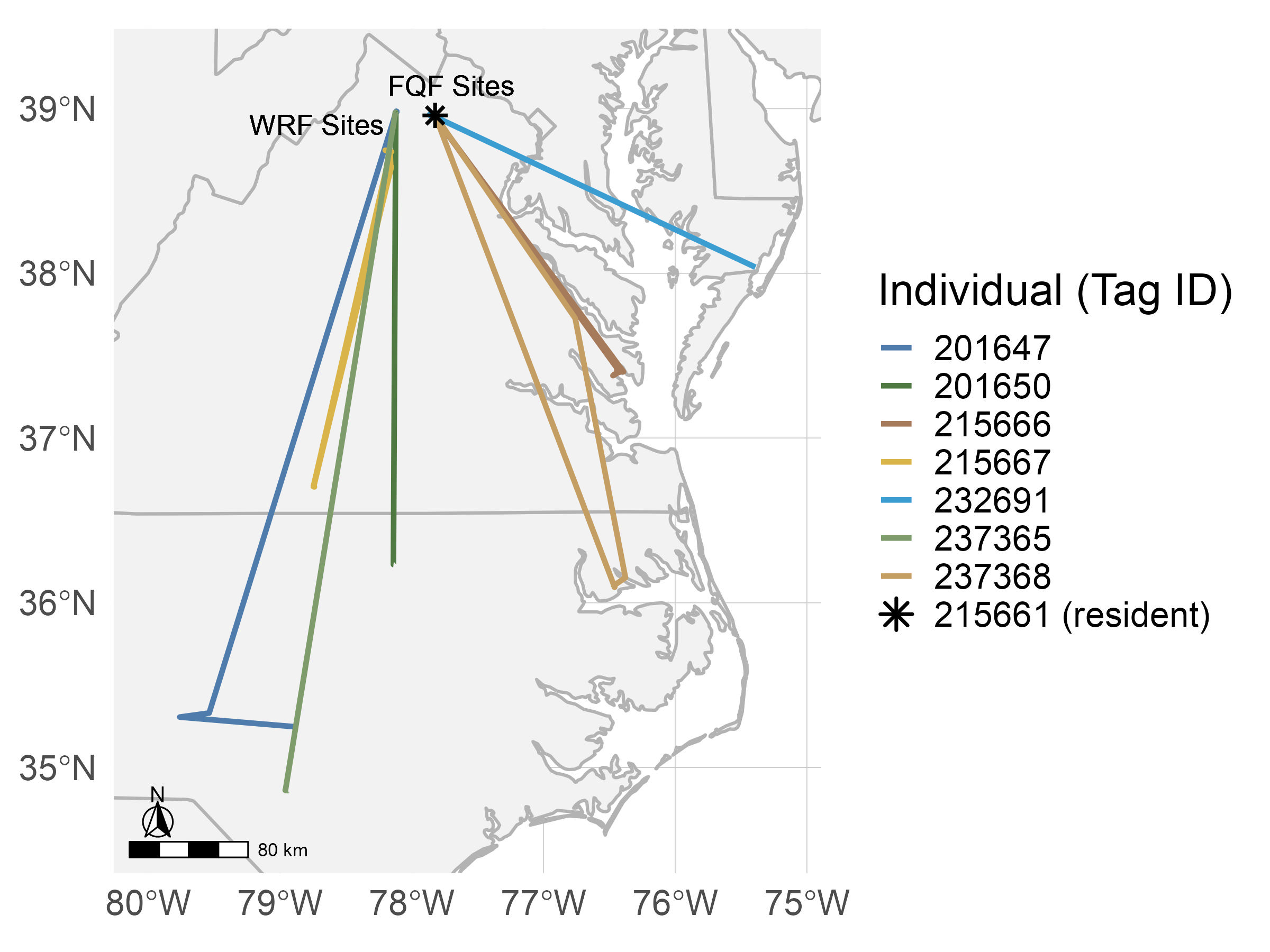
Fig. 2. Migratory tracks of eight eastern meadowlarks GPS-tagged at breeding sites in Virginia between 2021 and 2024. Tracks represent the straight-line movements between breeding grounds (“summer” points) and overwintering locations (“winter” points) inferred from GPS and Argos fixes. A single meadowlark remained resident year-round and is indicated on the map by a star symbol.
Fig. 3
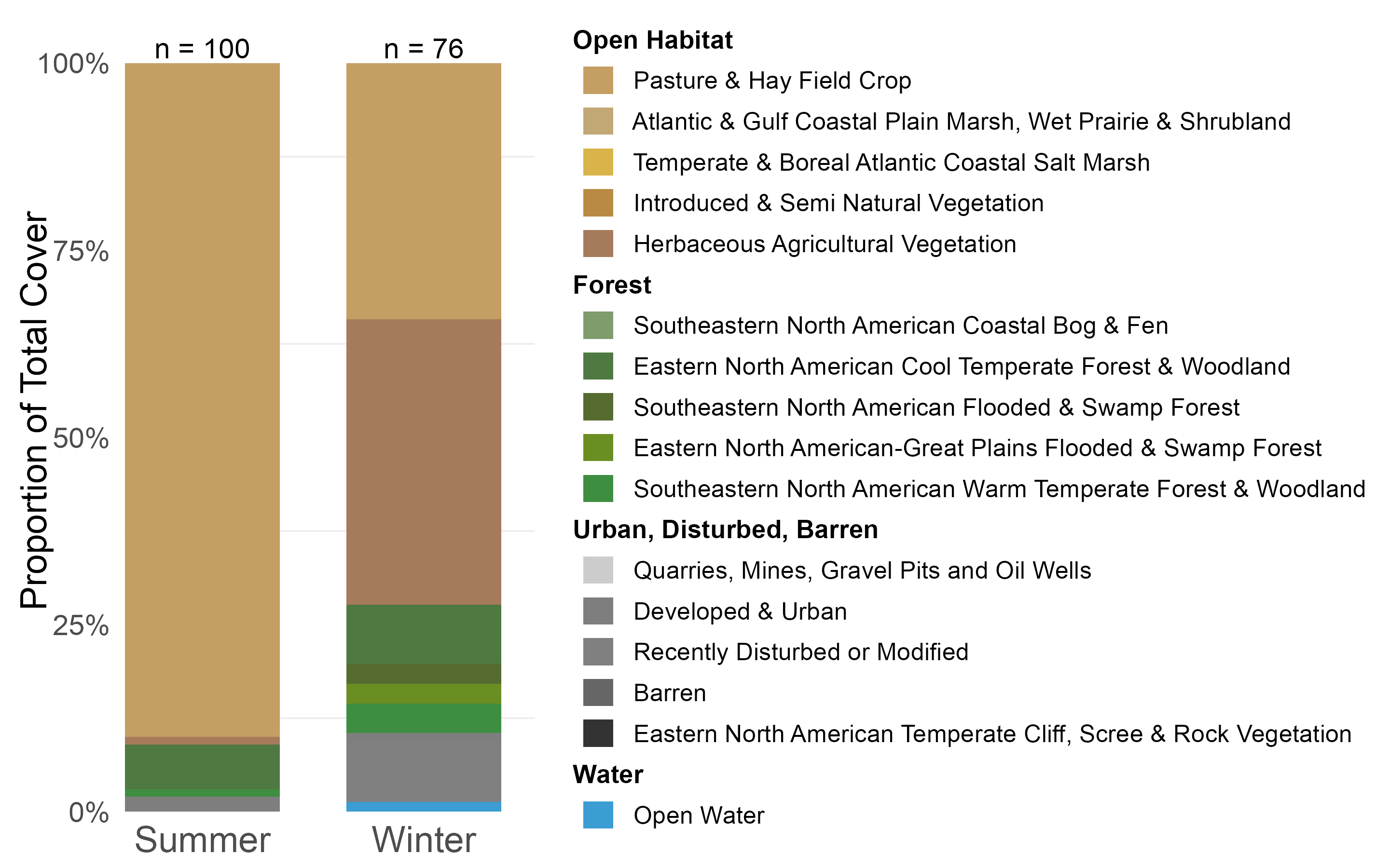
Fig. 3. Seasonal variation in habitat use by landcover type for 14 eastern meadowlarks GPS-tagged at breeding grounds in Virginia, 2021–2024. Land cover proportions were calculated as the number of location points (n = 176 points) within each landcover type divided by the total number of points per season.
Fig. 4
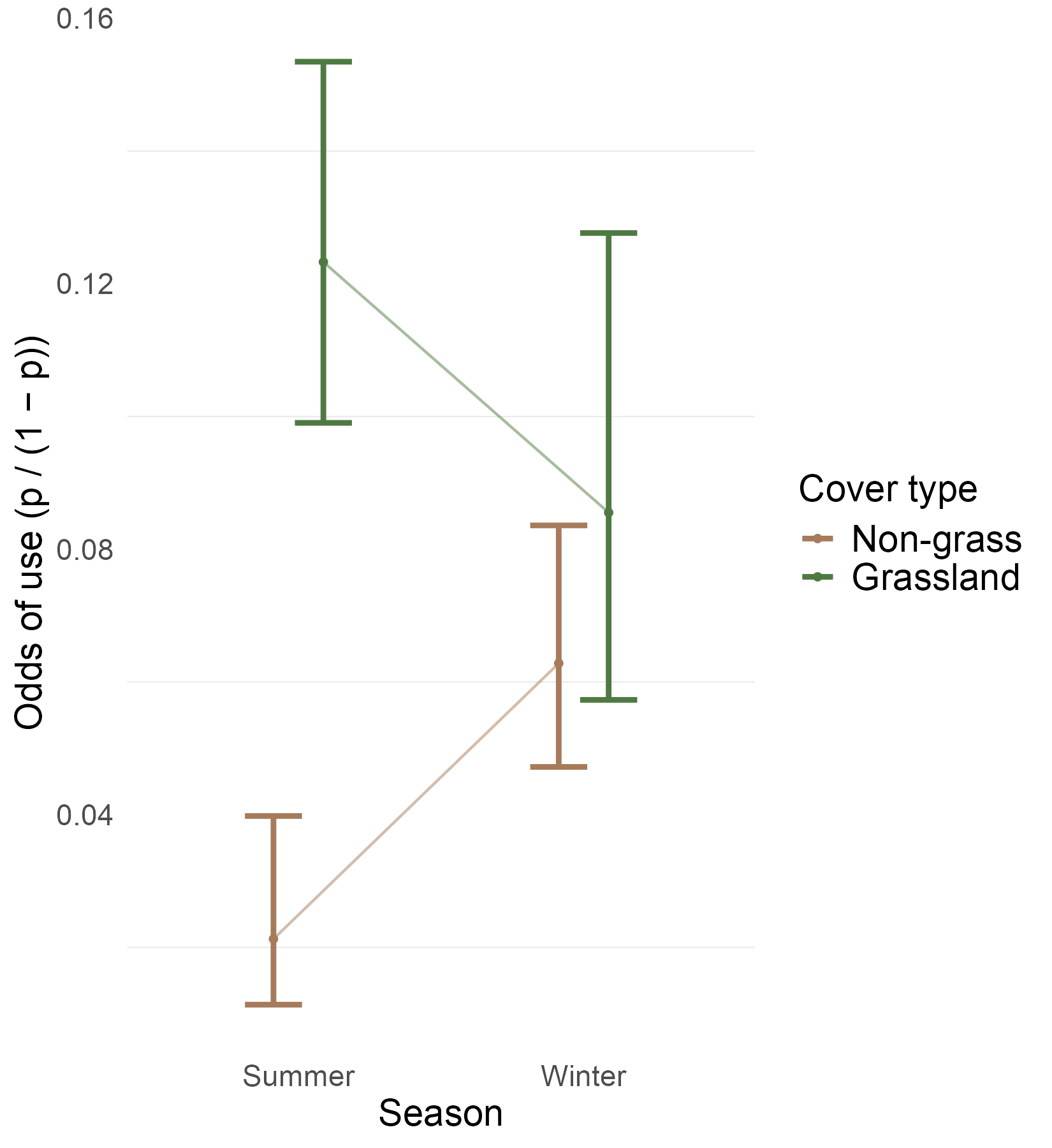
Fig. 4. Relative probability of selection estimated by Resource Selection Function in summer (brown) and winter (green) for 14 eastern meadowlarks GPS-tagged at breeding grounds in Virginia, 2021–2024.
Table 1
Table 1. Summary of satellite (GPS & Argos) tracking results for 14 Eastern Meadowlarks tagged between 2021 and 2024. Valid location counts are shown for each bird, classified by season, based on temporal and spatial clustering. Migration strategy was classified as migratory, resident, or unknown, depending on whether individuals shifted between distinct breeding and wintering locations. Migration dates are provided where available.
| Number of valid GPS / Argos fixes collected | Migration | ||||||||
| Tag ID | Year tagged | Total | Summer | Winter | Migration strategy | Fall dates | Spring dates | Distance traveled (km) | |
| 201647 | 2021 | 17 | 14 | 3 | Migrated | Oct 17-24 | - | 435 | |
| 201649 | 2021 | 4 | 4 | 0 | Unknown | - | - | ||
| 201650 | 2021 | 5 | 3 | 2 | Migrated | - | - | 305 | |
| 215661 | 2021 | 22 | 12 | 10 | Resident | - | - | ||
| 215664 | 2022 | 1 | 1 | 0 | Unknown | - | - | ||
| 215666 | 2021 | 28 | 13 | 15 | Migrated | Oct 14-21 | Feb 24-Mar 3 | 213 | |
| 215667 | 2021 | 30 | 22 | 8 | Migrated | - | Feb 24-Mar 3 | 231 | |
| 215668 | 2022 | 5 | 0 | 5 | Unknown | - | - | ||
| 229505 | 2023 | 5 | 0 | 5 | Unknown | - | - | ||
| 232690 | 2023 | 10 | 5 | 5 | Unknown | - | - | ||
| 232691 | 2023 | 8 | 6 | 2 | Migrated | Oct 27-Nov 3 | - | ||
| 232695 | 2023 | 2 | 2 | 0 | Unknown | - | - | ||
| 237365 | 2024 | 11 | 6 | 5 | Migrated | - | - | 464 | |
| 237368 | 2024 | 28 | 11 | 17 | Migrated | Oct 27-Nov 3 | Mar 8-15 | 340 | |