


The following is the established format for referencing this article:
Mahapatra, A., and R. S. Kumar. 2026. Nest partitioning in a mixed-species waterbird colony in a human-dominated landscape of southern India. Journal of Field Ornithology 97(4):2.ABSTRACT
Colonial waterbirds breed in dense, mixed-species assemblages where competition for nesting resources is intense, particularly in human-modified landscapes with limited nesting substrates. We examined nesting niche partitioning and sharing among five waterbird species: the Spot-billed Pelican Pelecanus philippensis, the Painted Stork Mycteria leucocephala, the Black-crowned Night Heron Nycticorax nycticorax, the Little Egret Egretta garzetta, and the Little Cormorant Microcarbo niger, at the Kokkare-Bellur Community Reserve, a village heronry embedded within a human settlement in southern India. Using pooled nesting data from five breeding seasons (2018–2023) from 399 trees, we analyzed spatial distribution, nesting tree preferences, and vertical nest stratification. Nest site selection was non-random; birds primarily utilized a few key tree species (notably Thespesia populnea and Tamarindus indica) that are characterized by large girth, dense canopies, and proximity to buildings. Spatial clustering revealed specific patch preferences, with pelicans segregating into distinct patches, whereas other species spatially overlapped. Vertical stratification positively correlated with species body size; larger pelicans nested highest, whereas smaller cormorants occupied the lowest strata. Despite spatial overlap, differences in nest density, nearest neighbor distances (ranging from 0.3 m for pelicans to 2.0 m for egrets), and vertical positioning reduced direct competition. Our findings demonstrate how colonial waterbirds combine niche partitioning and sharing strategies to persist within a spatially constrained environment, highlighting the conservation value of community-protected village heronries.
RESUMEN
Las aves acuáticas coloniales se reproducen en ensambles densos de especies mixtas donde la competencia por recursos de anidación es intensa, particularmente en paisajes modificados por humanos y con sustratos de anidación limitados. Examinamos la partición y el uso compartido de nichos de anidación entre cinco especies de aves acuáticas: el Pelícano Manchado Pelecanus philippensis, la Cigüeña Pintada Mycteria leucocephala, la Garza Bruja Nycticorax nycticorax, la Garza Pequeña Egretta garzetta, y el Pequeño Cormorán Microcarbo niger, en la Reserva Comunitaria Kokkare-Bellur, una colonia de garzas en el seno de un asentamiento humano en el sur de la India. Usando datos de anidación de 399 árboles de 5 temporadas reproductivas agrupadas (2018-2023), analizamos la distribución espacial, las preferencias de árboles para anidar, y la estratificación vertical de nidos. La selección de sitios de anidación fue no-aleatoria; las aves utilizaron primariamente unas cuantas especies de árboles clave (notablemente Thespesia populnea y Tamarindus indica) que se caracterizan por el gran grosor, copas densas y proximidad a edificios. La agrupación espacial reveló preferencias específicas de parches, con los pelícanos segregándose en parches distintos, mientras que otras especies se superponían espacialmente. La estratificación vertical se correlacionó positivamente con el tamaño de cuerpo; pelícanos más grandes anidaron más arriba, mientras que pequeños cormoranes ocuparon el estrato más bajo. A pesar de la superposición espacial, las diferencias en densidad de nidos, en distancias al vecino más cercano (en un rango de 0.3 m para pelícanos a 2.0 m para garzas), y en posicionamiento vertical, redujeron la competencia directa. Nuestros hallazgos demuestran cómo las colonias de aves acuáticas combinan las estrategias de partición y uso compartido de nichos para persistir dentro de un ambiente con limitaciones espaciales, resaltando el valor de conservación de las colonias de garzas en aldeas protegidas comunalmente.
INTRODUCTION
Colonial waterbirds are a diverse and ecologically significant group of avian species characterized by their gregarious nesting behavior. These birds aggregate in dense colonies, often comprising thousands of individuals from multiple species, to breed and raise their young (Burger 1981). Communal nesting offers advantages, including enhanced protection against predators through predator swamping and increased vigilance, as well as improved foraging efficiency through information sharing about food sources (Danchin and Wagner 1997, Brown and Brown 2001). However, these benefits come with ecological trade-offs. High-density breeding aggregations frequently lead to intense intra- and interspecific competition for essential resources, particularly suitable nesting sites and materials (Burger 1979, Gopi and Pandav 2011). The selection of appropriate nesting trees, therefore, becomes a crucial determinant of reproductive success and colony stability. Understanding the specific characteristics of trees chosen for nesting provides critical insights into the ecological drivers shaping the breeding distribution, habitat preferences, and interspecific interactions among colonial waterbirds (Urfi 2011, Roshnath and Sinu 2017, Frank et al. 2021).
In crowded colonies, direct competition for shared nesting resources is minimized (Burger 1979). Niche partitioning allows species to exploit different dimensions of their habitat, such as tree species, height, canopy density, or microhabitat features, thereby reducing resource use overlap (Gond et al. 2013, Scherer et al. 2014). This becomes particularly important when closely related or ecologically similar species breed in proximity, because even subtle differences in nesting preferences can alleviate competitive pressures (Berlusconi et al. 2025). For colonial waterbirds, such differentiation often manifests through nest-site segregation or vertical stratification within nesting trees (Abbasi and Khan 2023). In human-modified landscapes, where natural vegetation is frequently replaced, constrained, or structurally altered, the diversity of available nesting substrates can shift drastically, potentially altering the dynamics of this vertical partitioning. The “nesting height–bird size hypothesis” proposes a positive relationship between a species’ body size and its nesting height, reflecting adaptive partitioning along the vertical axis. This relationship has been well-documented in colonies with homogeneous vegetation (Burger 1979). However, this correlation can break down when the available vegetation height is highly heterogeneous, as was observed in a Madagascar heronry (Burger and Gochfeld 1990).
Evidence from recent studies further illustrates how colonial waterbirds across Asia employ such strategies to coexist within shared habitats. Ye et al. (2021), documented spatial, temporal, and trophic segregation between two sympatric ardeids: the Little Egret (Egretta garzetta) and the Eastern Cattle-Egret (Ardea coromanda) in central China, and reported that the latter nested higher, bred later, and foraged in distinct habitats. Similar ecological dynamics have been observed in India. Abbasi and Khan (2023) examined four egret species: the Great, Intermediate, Little, and Eastern Cattle-Egrets, in a tropical wetland of northern India, and demonstrated that fine-scale differences in microhabitat use, foraging schedules, and dietary preferences facilitated their coexistence. These findings underscore that even morphologically similar species can minimize direct competition through partitioning along spatial and temporal axes. Similarly, Frank et al. (2021) studied mixed-species heronries in southern India, where they highlighted how nesting tree characteristics, particularly height, canopy cover, and proximity to water, governed the vertical and spatial segregation of nests, thereby emphasizing the role of habitat structure in maintaining colony diversity and stability.
Whereas these studies primarily emphasize the ecological and structural aspects of coexistence, other research has focused on the social-ecological settings that also shape colonial breeding systems. Kannan (2023) examined waterbird colonies embedded within human settlements in southern India, documenting how species such as the Spot-billed Pelican (Pelecanus philippensis), the Painted Stork (Mycteria leucocephala), and the Black-crowned Night Heron (Nycticorax nycticorax) successfully breed in close proximity to people across sites such as Nelapattu, Telineelapuram, Koonthankulam, and Kokkare-Bellur (located across the southern Indian states of Andhra Pradesh, Tamil Nadu, and Karnataka). Notably, surveys of heronries across India (Subramanya 1996, 2001) revealed that over half of the country’s known colonies occur near or within villages, demonstrating a long-standing tradition of human tolerance and community protection. However, many of these sites have declined because of changing socio-cultural values (Manakadan and Kannan 2003). However, such human-associated heronries stand in contrast to natural or protected-area colonies that occupy expansive wetland or forest habitats. Within village landscapes, nesting trees are often limited in number, are spatially scattered, and are subject to anthropogenic influences. These conditions could intensify competition for nesting space and alter traditional patterns of niche differentiation. This raises a compelling ecological question: in a spatially confined, human-modified environment such as Kokkare-Bellur, how do colonial waterbirds utilize and partition nesting resources to sustain coexistence?
This study focuses on the colonial waterbird population nesting in trees integrated within a small village landscape. We examined how these species adapt their nesting preferences within a human-modified environment. We pooled nest data over five years (2018–2023) for five species (Table 1). The objective of this study was to explore: (1) nesting niche partitioning, (2) sharing among colonial nesting waterbird species, and (3) an understanding of how these species differ in their use of nesting resources within a shared habitat.
METHODS
This study was conducted in the Kokkare-Bellur Community Reserve (12°13′ N, 77°05′ E), situated in the Mandya District of Karnataka state in southern India (Fig. 1). Spanning an area of approximately 3.12 km², this reserve is unique because it is nestled entirely within a living human settlement; thus, the study area encompasses the village itself. The surrounding habitat is a gently undulating mosaic of paddy fields, sugarcane plantations, dryland crops, and scattered tree groves, and is devoid of a direct wetland source within the village boundary. Instead of a traditional protected forest, the nesting landscape is composed of mature trees growing in backyards, along roadsides, and within school and temple premises (Fig. 1). This makes it an exemplary site for studying human-wildlife interactions and habitat use in a heavily anthropogenic landscape. The villagers’ long-standing commitment to protecting these breeding birds, often viewing them with reverence and as indicators of prosperity, has fostered a uniquely stable nesting environment.
Our dataset comprised 399 individual trees, representing all trees surveyed within the main nesting patches in the village landscape. The term “main nesting patch” refers to clusters of trees within the village limits whose canopies interconnect, forming a continuous patch used collectively by colonial waterbirds for nesting. Including both nesting and non-nesting trees allowed us to distinguish characteristics that define suitable nesting habitats from those that are not. For each tree, we recorded its spatial coordinates via a handheld global positioning system (GPS; Garmin 72, accuracy ± 3 m). We also noted tree species identity, girth at breast height (GBH), tree height (measured using a 20 m marked pole), and canopy spread (estimated as the mean of two perpendicular canopy diameters). For all nesting trees, we identified each nest to species level and recorded the number of nests per species. The pooled nest counts across the five breeding seasons (2018–2023) provided a cumulative measure of nesting activity for each tree, allowing us to capture consistent nesting preferences over time rather than year-specific fluctuations. Over these five years, a total of 6786 nests were recorded across the five focal species (Table 1). We created a binary response variable (“nest flag”) to indicate the presence (1) or absence (0) of active nests on each tree. To examine the potential influence of anthropogenic proximity, we also measured the distance from each tree to the nearest road and the nearest built-up area via satellite imagery in Google Earth Pro and QGIS 3.22. These landscape-level variables provide a measure of human disturbance and accessibility.
All the analyses were carried out in R version 4.5.1 (R Core Team 2024). To explore whether nests of different species were spatially aggregated and particular tree patches were preferred, we first performed unsupervised clustering of the nesting-tree coordinates via the K-means algorithm. We determined the optimal number of spatial clusters (k) via the elbow method (Kassambara 2017). For each cluster, we calculated the relative abundance and species composition to identify any patterns of spatial segregation among the dominant nesting species. We further visualized the nesting space by generating Kernel density estimation (KDE) heatmaps for each species (Spurr 2003). These maps illustrated areas of high nest density, allowing us to qualitatively assess spatial overlap and segregation in nest distribution within the village landscape.
To investigate how tree structural and environmental characteristics influence nesting, we used non-metric multidimensional scaling (NMDS) on scaled tree-level variables (tree height, GBH, canopy spread, distance to roads, and distance to built-up areas). NMDS is a non-parametric ordination method suitable for non-normal ecological data (Minchin 1987). We fitted environmental vectors to the ordination via the envfit function to identify which variables most strongly correlated with the nesting patterns of the species. To statistically evaluate whether the dominant nesting species differed in their use of tree characteristics, we conducted PERMANOVA (adonis2) analysis on the tree attribute matrix. This approach allowed us to test for significant multivariate differences in nesting-tree structure among species. We modeled the probability of a tree being used for nesting via a generalized linear model (GLM) with a binomial error structure. Because some tree species were either exclusively used or entirely avoided by particular bird species, the data exhibited quasi-complete separation. To address this, we applied Firth’s penalized logistic regression (Heinze and Schemper 2002) via the “logistf” package in R. The predictors included tree structural variables (height, GBH, canopy spread), landscape variables (distance to road, distance to built-up area), and tree species identity. We exponentiated the model coefficients to obtain odds ratios (ORs). However, because it can be misleading to express preference for categorical variables as an odds ratio relative to a single arbitrary reference tree species, we calculated the estimated probability of nest occurrence (with 95% profile-likelihood confidence intervals) for each tree species. Statistical significance was determined via penalized likelihood ratio tests.
To assess potential interspecific differences in nearest neighbor distance (NND), nest density, and nest height, we first tested for normality via the Shapiro-Wilk test, and for homogeneity of variances via Levene’s test. Because both the raw and log-transformed data violated the assumptions of normality and homogeneity of variances, we used the Kruskal-Wallis rank-sum test to compare medians among species, followed by Dunn’s post-hoc test with Holm-adjusted p-values for pairwise comparisons (Dunn 1964, Holm 1979). We defined nest density as the total number of nests per tree for each species. For vertical nest stratification analysis, we compared nest heights among species via the same non-parametric framework. We further examined the relationship between average body size (as an indicator of morphological scaling) and mean nest height across species via Pearson’s correlation, testing the nesting height–body size hypothesis. Because capturing nesting adults to obtain individual morphometrics would cause severe disturbance and risk nest abandonment, we utilized body length data corresponding to the higher end of the size ranges for the five focal species, sourced from the Birds of the World online database (Elliot et al. 2020a,b, Hothem et al. 2020, Mlodinow et al. 2024, Orta et al. 2024).
RESULTS
Observations of nesting phenology across the five seasons revealed staggered initiation but extensive temporal overlap among the species. The Spot-billed Pelican consistently initiated nesting earlier than the others, commencing in October. In contrast, the Painted Stork and the smaller waterbird species (Black-crowned Night Heron, Little Egret, and Little Cormorant) typically commenced nesting from January onwards. Despite these differences in initiation timing, the active nesting periods of all five species overlapped significantly throughout the core breeding season. K-means clustering analysis revealed four distinct spatial clusters (k = 4) of nesting trees, indicating prominent spatial groupings within the study site (Fig. 2). Although each cluster contained nests from multiple species, suggesting broad-scale cohabitation, a closer look revealed subtle spatial partitioning. For example, clusters 2 and 3 were strongly dominated by the Painted Stork and the Black-crowned Night Heron, respectively. The Spot-billed Pelican appeared more aggregated in the north-eastern clusters, possibly because of the selection of less disturbed patches. In contrast, the Little Cormorant and the Little Egret were more scattered. This finding demonstrates that, although the species are not segregated into single-species colonies, they do show preferences for specific spatial patches, indicating that habitat patch use reduces interspecific competition. The kernel density heatmaps provided a fine-scale view of spatial preferences and overlap (Fig. 3). They revealed a high degree of spatial overlap, particularly between the Little Cormorant and the Little Egret, whose heatmaps were nearly identical, showing dense nesting concentrations in the same two primary locations. A similar high overlap was observed between the Painted Stork and the Black-crowned Night Heron. Conversely, the Spot-billed Pelican formed a distinct cluster in the northern and eastern portions of the site, with only sparse overlap with other species. This suggests that, although overall coexistence is the norm, species often maintain core, high-density nesting zones that are spatially distinct, reflecting niche partitioning at the microhabitat scale.
Contingency analysis of nests observed versus not observed across available tree species revealed that waterbirds do not randomly select nesting sites (χ² = 167.27, df = 18, P < 0.01). A small number of tree species account for the vast majority of nesting activity. Conversely, 12 species, including Eucalyptus and Tectona grandis, were completely avoided (Table 2). To further examine species-specific preferences, a refined contingency comparison was conducted among the four most frequently utilized tree species (Ficus benghalensis, Tamarindus indica, Thespesia populnea, and Delonix elata). This analysis also demonstrated significant differences in proportional usage (χ² = 23.85, df = 3, P < 0.01). Specifically, F. benghalensis and T. indica (92.3% and 89.3% of available trees, respectively) were almost invariably used for nesting when present, whereas T. populnea and D. elata were selected in 74.8% and 48.5% of instances, respectively. A non-metric multidimensional scaling (NMDS) ordination was performed on the scaled tree habitat variables. The two-dimensional NMDS solution had a stress value of 0.182, indicating observed dissimilarities in reduced dimensional space. An environmental fitting (envfit) procedure identified five environmental variables with the strongest and most significant correlations: tree height (r² = 0.69), GBH (r² = 0.67), canopy spread (r²= 0.63), canopy cover (r² = 0.57), and nearest distance to built-up area (r² = 0.43; Fig. 4). Species such as the Spot-billed Pelican and the Painted Stork were more strongly associated with sites of taller trees, greater GBH, and broader canopy spread. In contrast, the Little Cormorant was more aligned with areas closer to built-up infrastructure. The Little Egret and the Black-crowned Night Heron presented broader ecological tolerances across these gradients (Fig. 4). PERMANOVA (adonis2) analysis further confirmed these findings. The model indicated that the dominant species variable explained 8.76% of the variation in nesting tree characteristics (r² = 0.08). The F-statistic (F = 4.486) and a highly significant p-value (P < 0.01) revealed that the differences in the multivariate centroid locations of the species were not due to chance, confirming that tree structural characteristics vary significantly among the dominant nesting species.
The penalized logistic regression model identified several key predictors of nesting probability and showed a significant improvement over the null model (likelihood ratio test = 221.28, df = 35, P < 0.01), indicating that the combination of tree morphology and landscape context drives nesting site selection. GBH emerged as a strong positive predictor of nesting probability (odds ratio = 1.01, P < 0.01), reflecting a clear preference for larger and structurally more stable trees. Canopy cover also showed a significant positive association, with the likelihood of nesting (odds ratio = 1.02, P < 0.01), suggesting that trees with denser foliage are favored as nesting substrates. In contrast, canopy spread was a significant negative predictor (odds ratio = 0.98, P < 0.01), indicating selection for trees with compact, densely branched canopies rather than those with broad horizontal spreads. Distance to built-up areas was likewise negatively associated with probability of nesting (odds ratio = 0.97, P < 0.01), demonstrating that trees located closer to human habitation were more likely to be used for nesting. In addition to these structural and landscape effects, the model provided strong evidence for species-level avoidance, with certain tree species, notably Tectona grandis and Saraca asoca, actively avoided as nesting sites (exhibiting estimated probabilities of occurrence near zero).
Nesting tree preferences for the five focal species were analyzed via forest plots (Fig. 5), which depict the selection of nesting sites relative to tree availability in the village landscape. The analysis revealed that particular tree species, although rare in the area, with only a single individual present, were disproportionately used for nesting, indicating strong species-specific preferences. The Spot-billed Pelican exhibited a marked affinity for Ficus benghalensis and Tamarindus indica, suggesting a reliance on large trees for colony establishment. The Painted Stork, although generally more flexible in its nesting choices, showed a notable preference for Albizia amara. Both the Little Egret and the Little Cormorant appeared to be generalist nesters, utilizing a wide range of tree species; however, both groups tended to select Albizia spp. and Areca catechu as preferred nesting substrates. In contrast, the Black-crowned Night Heron displayed distinct selectivity, predominantly nesting in Cassia fistula and Ficus mysorensis, indicating specific structural or microhabitat requirements associated with these species.
The Kruskal-Wallis test revealed a highly significant difference in nearest neighbor distance (NND) between species (χ² = 724.43, df = 4, P < 0.01). Post-hoc Dunn’s tests revealed that nearly all the species pairs differed significantly. The Spot-billed Pelican presented the smallest median NND (~0.3 m), indicating highly clustered nest placement. In contrast, the Little Egret had the largest median NND (~2.0 m), followed by the Black-crowned Night Heron (~1.4 m; Fig. 6). These findings suggest that species-specific behaviors and body sizes play crucial roles in horizontal spatial partitioning. The Kruskal-Wallis test also revealed a significant difference in nest density among species (χ² = 18.647, df = 4, P < 0.01). Dunn’s post-hoc tests indicated that the Little Egret presented significantly lower mean nest densities than other species did. No significant differences were found between the Little Cormorant, the Black-crowned Night Heron, the Spot-billed Pelican, and the Painted Stork after p-value adjustment. The Spot-billed Pelican shows the highest variability in density, with some extreme outliers reaching nearly 90 nests per tree. The median density for the Spot-billed Pelican is relatively high compared with that of other species, indicating that the Spot-billed Pelican often nests in large colonies. The Little Cormorant also has a relatively high median density (approximately 8–10 nests per tree), with a few trees containing over 40 nests, suggesting moderately large group nesting. The Painted Stork has a moderate median density but is widespread, including some trees with 40–50 nests, indicating that the Painted Stork sometimes nests in large aggregations. The Black-crowned Night Heron had a moderate median density (similar to the Painted Stork) but a slightly lower spread, with fewer extremely high-density cases. On the other hand, the Little Egret had the lowest median density (approximately 2–3 nests per tree) and the smallest spread, indicating that it generally nests more sparsely than the other species do (Fig. 7).
Analysis of nest height revealed a clear pattern of vertical stratification within the colony, with species nesting at different heights on the basis of their body size. The five study species varied in body length (Table 1). The Kruskal-Wallis rank-sum test revealed a highly significant difference in nest height among the five species (χ² = 673.26, df = 4, P < 0.01). Post-hoc Dunn’s tests further confirmed that almost all the species nested at significantly different mean heights from one another. The Spot-billed Pelican nested at the greatest heights, significantly greater than that of all the other species (P < 0.01). The Painted Stork, which is a large-bodied bird, nested in upper strata and was similar to the Spot-billed Pelican. The Little Cormorant occupied the lowest mean nesting heights, which were significantly lower than those of all the other species (P < 0.01). The Little Egret and the Black-crowned Night Heron nested at intermediate heights. Their nest heights differed significantly from each other, with the Black-crowned Night Heron nesting slightly higher on average (P < 0.01; Fig. 8). A strong and positive Spearman’s rank correlation was found between the mean adult body length of the species and their mean nest height (rho = 1, P < 0.01). This indicates a perfect monotonic relationship: as a species’ body size increases, its average nesting height also increases, a pattern that is clearly reflected in the vertical stratification of the colony (Fig. 8).
DISCUSSION
This study provides a comprehensive analysis of nesting niche partitioning and sharing among five colonial waterbird species in the unique, human-modified landscape of the Kokkare-Bellur Community Reserve. These findings demonstrate that, although these species coexist within a shared habitat, they employ distinct strategies to partition resources, primarily by selecting specific nesting sites on the basis of a combination of spatial, morphological, and structural characteristics. This differential resource selection is a principal factor that permits species to coexist in a shared environment (Schoener 1974, Rosenzweig 1981).
Our results confirm that nesting tree selection is non-random, with a clear preference for a few tree species, notably Thespesia populnea and Tamarindus indica. This finding corroborates the literature on colonial waterbirds, which often highlights the importance of specific tree species in supporting large breeding aggregations because of their structural suitability (Urfi 2011, Gond et al. 2013). This preference for certain trees, such as Tamarindus indica, aligns with observations from other heronries in southern India where these trees, often located along roadsides or on temple premises, provide excellent nesting habitats for smaller species such as the Little Cormorant and the Little Egret (Frank et al. 2021). The complete avoidance of 12 tree species, such as Eucalyptus and Tectona grandis, reflects their unsuitability, possibly because of poor canopy structure or low stability. The strong positive relationship with GBH suggests a fundamental requirement for structural stability. Larger, older trees with thicker trunks and branches likely provide a more robust platform to support the heavy, aggregated nests of a colonial breeding site (Gopi and Pandav 2011, Urfi 2011). The preference for dense canopies provides essential concealment from aerial predators and protection from direct solar radiation, contributing to a stable microclimate for nestlings. The simultaneous negative association with canopy spread is not a contradiction but rather a key insight into the specific tree architecture preferred by these birds. This finding suggests a selective preference for a compact, densely branched, and foliated canopy that offers a robust, focused support structure, as opposed to a simple, broad canopy that may lack the necessary interlocking branches. The non-metric multidimensional scaling and PERMANOVA tests revealed significant differences in the use of trees and landscape characteristics among the species. For example, the larger-bodied Spot-billed Pelican and the Painted Stork showed a strong preference for taller trees with greater GBHs, whereas the Little Cormorant was more closely associated with areas closer to human habitation. This suggests a form of spatial niche partitioning in which different species exploit distinct microhabitats within the broader reserve. The tendency of the Spot-billed Pelican to aggregate in north-eastern and presumably less-disturbed patches support the idea of spatial segregation at the macro-scale, as is observed in other colonial species that form distinct sub-colonies to reduce intraspecific and interspecific competition (Burger 1979).
One of the most interesting findings is the significant preference for nesting sites located closer to human settlements. Although human presence often acts as a disturbance, the unique social-ecological system at Kokkare-Bellur presents a different narrative. Villagers have been protecting these birds and their nests from ancient times, and as a result the Government of India and the Karnataka State Forest Department declared this area a community reserve. Although the nesting trees are located on private lands, the local community, along with the Forest Department, is actively protecting these sites. The Forest Department provides financial compensation for each tree used for nesting, ensuring strict protection. Because of this economic incentive and deep-rooted cultural tolerance, villagers abstain entirely from pruning or harvesting tree materials during the nesting season. This lack of human alteration allows the trees to maintain the dense, stable canopy architectures that our results show are actively selected by the breeding birds. Furthermore, there is strictly no harvesting of eggs or human-induced predation, and although there is a potential for natural avian predation by crows or raptors, such events have not been recorded. Instead of acting as a threat, the proximity to human habitation provides a highly stable environment where the nesting birds benefit from a long-standing tradition of human tolerance and community protection (Subramanya 1996).
The most compelling evidence for niche partitioning in this study comes from the clear pattern of vertical stratification of nests within the colony. Consistent with the nesting height-bird size hypothesis, we found a strong positive correlation between a species’ body size and its mean nesting height. Because extreme structural variability can disrupt this correlation (Burger and Gochfeld 1990), we quantified the available vegetative height across our surveyed trees to contextualize our site. We found the canopy to be highly heterogeneous, ranging from 3 m to 18 m (mean = 8.15 m ± 3.13 SD, coefficient of variation = 38.4%). Despite this considerable variability, the strict positive correlation between body size and nest height was maintained at Kokkare-Bellur. This suggests that in this spatially constrained, human-dominated landscape, intense competition for limited optimal nesting trees drives strong vertical sorting, where dominant larger species successfully secure the highest strata regardless of the overall structural variability of the habitat. The observed pattern with the Spot-billed Pelican and the Painted Stork occupying the highest strata, followed by the intermediate-sized Little Egret and the Black-crowned Night Heron, and finally the smaller Little Cormorant at the lowest heights, is corroborated by findings from other mixed heronries in southern India (Kumar et al. 2009). This phenomenon is an evolutionary adaptation that mitigates the harmful effects of interspecific competition (Naugle et al. 1996). The varying nearest-neighbor distances also highlight species-specific nesting behaviors. The highly clustered nests of the Spot-billed Pelican and the Little Cormorant indicate a preference for high-density group nesting, which can provide benefits such as predator swamping. In contrast, the more dispersed nesting of the Little Egret suggests a different social strategy. Despite the clear evidence of partitioning, the study also highlights significant niche sharing. The kernel density heatmaps revealed a high degree of spatial overlap, particularly between the Little Cormorant and the Little Egret, and between the Painted Stork and the Black-crowned Night Heron. This suggests that although species may partition resources vertically or on the basis of tree morphology, they often share the same general patches of habitat. This finding is further supported by the statistical similarity in nest density among several species, indicating that many of them tolerate similar levels of conspecific and heterospecific nesting proximity within a tree. This coexistence is a key feature of mixed-species colonies and may be facilitated by the superabundance of suitable nesting sites, a feature observed in other heronries (Kumar et al. 2009, Gopi and Pandav 2011, Gond et al. 2013). The ability of these species to coexist, despite their spatial and nesting preferences suggests a dynamic balance between competition and resource availability. This is particularly relevant in a human-modified landscape such as Kokkare-Bellur, where resource availability may be less predictable.
CONCLUSION
This study demonstrated that colonial nesting waterbirds at Kokkare-Bellur employ a combination of niche partitioning and niche sharing to enable their coexistence within a shared habitat. Despite overlapping in space, these species effectively segregate resources through several mechanisms. First, they exhibit selective use of specific tree species and structural attributes, showing a strong preference for large, robust trees with dense canopies and high GBH that are often located near built-up areas. Second, a distinct pattern of vertical stratification by body size was observed, with larger species nesting at greater heights, providing clear evidence of resource partitioning as a means of reducing interspecific competition for nesting sites. Finally, spatial patch preferences were apparent, as some species, notably the Spot-billed Pelican, tended to occupy distinct clusters within the nesting landscape, indicating a broader-scale partitioning of habitat space. Together, these strategies highlight the complex ecological interactions that facilitate the stable coexistence of multiple colonial waterbird species within a limited nesting environment.
This research contributes to the understanding of community ecology in fragmented, human-dominated landscapes. These findings have direct implications for the long-term conservation of the community reserve. Conservation efforts should prioritize the protection of mature trees with the desired structural characteristics: high GBH and dense, compact canopies. The results also underscore the critical importance of the human dimension in conservation, emphasizing the need for continued engagement and education of the local community to maintain the protective environment that benefits birds. Future research should expand on these findings by conducting species-specific analyses of nesting preferences to uncover finer-scale differences. Investigating additional unmeasured variables, such as specific branch angles or leaf characteristics, could provide a more complete understanding of the architectural features that influence nesting decisions.
RESPONSES TO THIS ARTICLE
Responses to this article are invited. If accepted for publication, your response will be hyperlinked to the article. To submit a response, follow this link. To read responses already accepted, follow this link.
AUTHOR CONTRIBUTIONS
Both authors contributed to the study’s conception and design. Material preparation, data collection, and analysis was performed by A. Mahapatra. The first draft of the manuscript was written by A. Mahapatra, and both authors re-reviewed and approved the final manuscript.
ACKNOWLEDGMENTS
The authors would like to thank the Karnataka Forest Department, and particularly the Mysuru Wildlife Division, for financially supporting this research. We are grateful to Lokesh P. Gowda, Linge Gowda, Anam Fatima, Bhanusri P., Shreya Guha, Bernice Ben, Prachi, and Manjunathan J. for their valuable assistance during field data collection. We also sincerely thank Hareendra Baraiya for reviewing multiple drafts of the manuscript and for his constructive comments and help in fine-tuning the final version. Our appreciation is extended to the local community of Kokkare-Bellur for their continued cooperation and support, which made this study possible. All field observations and research activities were conducted in compliance with the current laws and regulations of India.
DATA AVAILABILITY
The data/code that support the findings of this study are openly available in Figshare at https://doi.org/10.6084/m9.figshare.30987679. Ethical approval for this research study was granted by the Karnataka State Forest Department (No. PCCF (WL)/E2/CR-28/2019-20).
LITERATURE CITED
Abbasi, S., and J. A. Khan. 2023. Spatial, temporal, and trophic niche partitioning among four sympatric egret species in a tropical wetland of northern India. Wetlands Ecology and Management 31:707-722.
Berlusconi, A., G. Castiglione, L. A. Wauters, A. Martinoli, E. Clerici, A. Mologni, M. Morganti, A. Martinoli, A. Romano, and D. Rubolini. 2025. Habitat partitioning and spatial segregation at multiple scales promotes year-round coexistence in a guild of forest songbirds. Ibis 167(4):912-926. https://doi.org/10.1111/ibi.13423
Brown, C. R., and M. B. Brown. 2001. Coloniality in the Cliff Swallow: the effect of group size on foraging behavior. University of Chicago Press, Chicago, Illinois, USA.
Burger, J. 1979. Resource partitioning: nest site selection in mixed species colonies of herons, egrets and ibises. American Midland Naturalist 101(1):191-210. https://doi.org/10.2307/2424913
Burger, J. 1981. A model for the evolution of mixed-species colonies of Ciconiiformes. Quarterly Review of Biology 56(2):143-167. https://doi.org/10.1086/412176
Burger, J., and M. Gochfeld. 1990. Vertical nest stratification in a heronry in Madagascar. Colonial Waterbirds 13(2):143-146. https://doi.org/10.2307/1521583
Danchin, É., and R. H. Wagner. 1997. The evolution of coloniality in birds: the emergence of new perspectives. Trends in Ecology & Evolution 12(9):342-347. https://doi.org/10.1016/S0169-5347(97)01124-5
Dunn, O. J. 1964. Multiple comparisons using rank sums. Technometrics 6(3):241-252. https://doi.org/10.1080/00401706.1964.10490181
Elliott, A., D. A. Christie, F. Jutglar, and E. de Juana. 2020a. Spot-billed Pelican (Pelecanus philippensis). Version 1.0. in J. del Hoyo, A. Elliott, J. Sargatal, D. A. Christie, and E. de Juana, editors. Birds of the world. Cornell Lab of Ornithology, Ithaca, New York, USA. https://doi.org/10.2173/bow.spbpel1.01
Elliott, A., E. Garcia, P. F. D. Boesman, and G. M. Kirwan. 2020b. Painted Stork (Mycteria leucocephala). Version 1.0. in J. del Hoyo, A. Elliott, J. Sargatal, D. A. Christie, and E. de Juana, editors. Birds of the world. Cornell Lab of Ornithology, Ithaca, New York, USA. https://doi.org/10.2173/bow.paisto1.01
Frank, S. J. D., G. V. Gopi, and B. Pandav. 2021. Heronry distribution and site preference dynamics of tree-nesting colonial waterbirds in Tamil Nadu. PeerJ 9:e12256. https://doi.org/10.7717/peerj.12256
Gond, S. K., A. Mishra, V. K. Sharma, S. K. Verma, and R. N. Kharwar. 2013. Resource partitioning between two “near threatened” heronry species—a case of nest sharing between Painted Stork (Mycteria leucocephala) and Black-headed Ibis (Threskiornis melanocephalus). Current Science 105(2):169-174
Gopi, G. V., and B. Pandav. 2011. Nest space partitioning among colonial nesting waterbirds at Bhitarkanika Mangroves, India. World Journal of Zoology 6(1):61-72.
Heinze, G., and M. Schemper. 2002. A solution to the problem of separation in logistic regression. Statistics in Medicine 21(16):2409-2419. https://doi.org/10.1002/sim.1047
Holm, S. 1979. A simple sequentially rejective multiple test procedure. Scandinavian Journal of Statistics 6(2):65-70.
Hothem, R. L., B. E. Brussee, W. E. Davis Jr., A. Martínez-Vilalta, A. Motis, and G. M. Kirwan. 2020. Black-crowned Night Heron (Nycticorax nycticorax). Version 1.0. in S. M. Billerman, editor. Birds of the world. Cornell Lab of Ornithology, Ithaca, New York, USA. https://doi.org/10.2173/bow.bcnher.01
Kannan, R. 2023. Coexistence and conflict: a case study on colonial waterbirds in southern India. Pages 111-123 in P. P. Kulkarni, N. Arora, and S. F. Raj, editors. Palgrave handbook of socio-ecological resilience in the face of climate change: contexts from a developing country. Palgrave Macmillan, Singapore. https://doi.org/10.1007/978-981-99-2206-2_9
Kassambara, A. 2017. Practical guide to cluster analysis in R: unsupervised machine learning. CreateSpace Independent, Scotts Valley, California, USA.
Kumar, N. N., A. Nagarjuna, and D. C. Reddy. 2009. Vertical gradient and resource partitioning of migratory birds on Barringtonia tree in Nelapattu Bird Sanctuary. World Journal of Zoology 4(3):223-224.
Manakadan, R., and V. Kannan. 2003. A study of Spot-billed Pelican Pelecanus philippensis with special reference to its conservation in southern India. Bombay Natural History Society, Mumbai, India.
Minchin, P. R. 1987. An evaluation of the relative robustness of techniques for ecological ordination. Vegetatio 69(1-3):89-107. https://doi.org/10.1007/BF00038690
Mlodinow, S. G., G. M. Kirwan, and P. Pyle. 2024. Little Egret (Egretta garzetta). Version 2.1. in B. K. Keeney, N. D. Sly, and S. M. Billerman, editors. Birds of the world. Cornell Lab of Ornithology, Ithaca, New York, USA. https://doi.org/10.2173/bow.litegr.02.1
Naugle, D. E., R. R. Johnson, W. A. Meeks, and K. F. Higgins. 1996. Colonization and growth of a mixed-species heronry in South Dakota. Colonial Waterbirds 19(2):199-206. https://doi.org/10.2307/1521856
Orta, J., F. Jutglar, E. Garcia, G. M. Kirwan, and P. F. D. Boesman. 2020. Little Cormorant (Microcarbo niger). Version 1.0. in J. del Hoyo, A. Elliott, J. Sargatal, D. A. Christie, and E. de Juana, editors. In Birds of the world. Cornell Lab of Ornithology, Ithaca, New York, USA. https://doi.org/10.2173/bow.litcor1.01
R Core Team. 2024. R: a language and environment for statistical computing. R Foundation for Statistical Computing, Vienna, Austria. https://www.R-project.org/
Rosenzweig, M. L. 1981. A theory of habitat selection. Ecology 62(2):327-335. https://doi.org/10.2307/1936707
Roshnath, R., and P. A. Sinu. 2017. Nesting tree characteristics of heronry birds of urban ecosystems in peninsular India: implications for habitat management. Current Zoology 63(6):599-605. https://doi.org/10.1093/cz/zox006
Scherer, J. D. F. M., A. L. Scherer, and M. V. Petry. 2014. Vertical nest stratification of four heron species in southern Brazil. Studies on Neotropical Fauna and Environment 49(1):66-74. https://doi.org/10.1080/01650521.2014.921976
Schoener, T. W. 1974. Resource partitioning in ecological communities. Science 185(4145):27-39. https://doi.org/10.1126/science.185.4145.27
Spurr, K. C. 2003. Use of geographic information systems and global positioning technology to map and study nesting trends and density dynamics of a heronry on the upper Mississippi. Thesis, St. Mary’s University of Minnesota, Minneapolis, Minnesota, USA.
Subramanya, S. 1996. Distribution, status and conservation of Indian heronries. Journal of the Bombay Natural History Society 93(3):459-486.
Subramanya, S. 2001. Heronries of India: a review of their conservation status. Newsletter for Birdwatchers 41(5):65-78.
Urfi, A. J. 2011. Nesting ecology. Pages 47-70 in A. J. Urfi, editor. The Painted Stork: ecology and conservation. Springer, New York, New York, USA. https://doi.org/10.1007/978-1-4419-8468-5_3
Ye, Y., C. Hu, Y. Jiang, G. W. Davison, and C. Ding. 2021. Three-dimensional niche partitioning between two colonially nesting ardeid species in central China. Avian Research 12(1):33. https://doi.org/10.1186/s40657-021-00264-7
Fig. 1
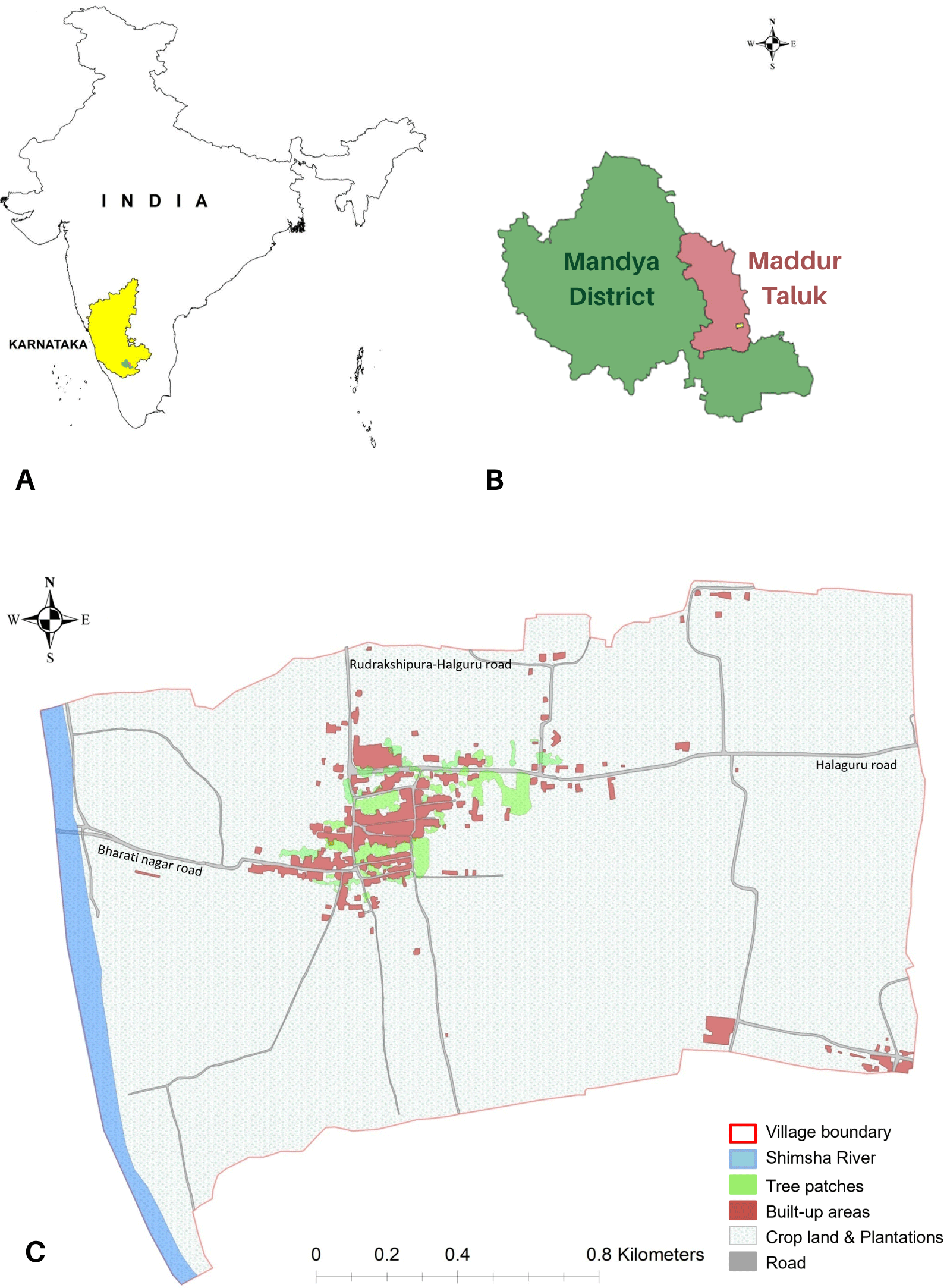
Fig. 1. Map of the study area detailing the Kokkare-Bellur Community Reserve (12°13′ N, 77°05′ E). (A) location of Karnataka state within India, (B) Maddur Taluk within the Mandya District, and (C) detailed layout of the Kokkare-Bellur village/reserve boundary.
Fig. 2
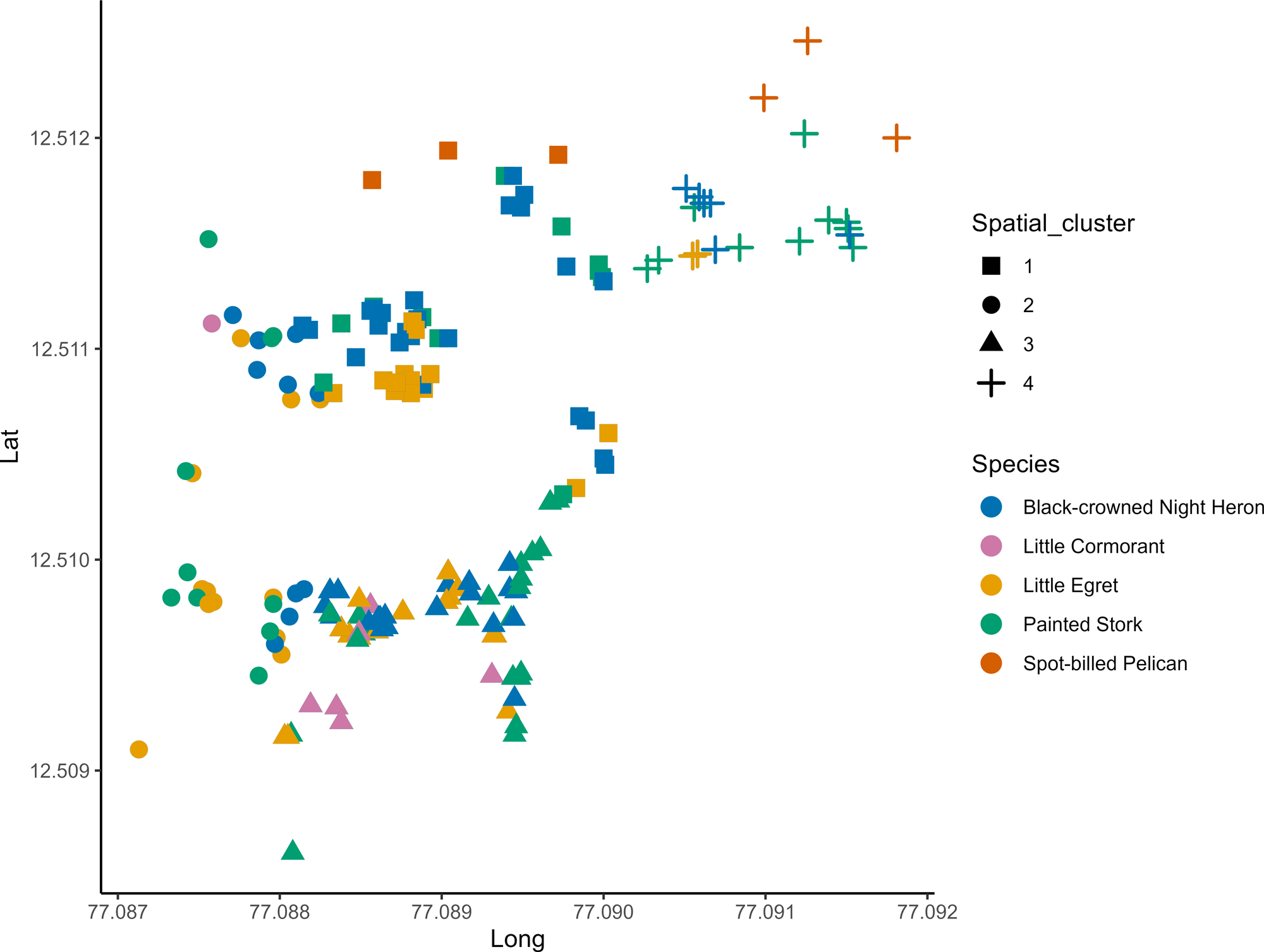
Fig. 2. Clustering of nesting trees based on spatial coordinates using k-means. Each color represents a distinct species, and distinct shapes represent spatial clusters. See Table 1 for species scientific names.
Fig. 3
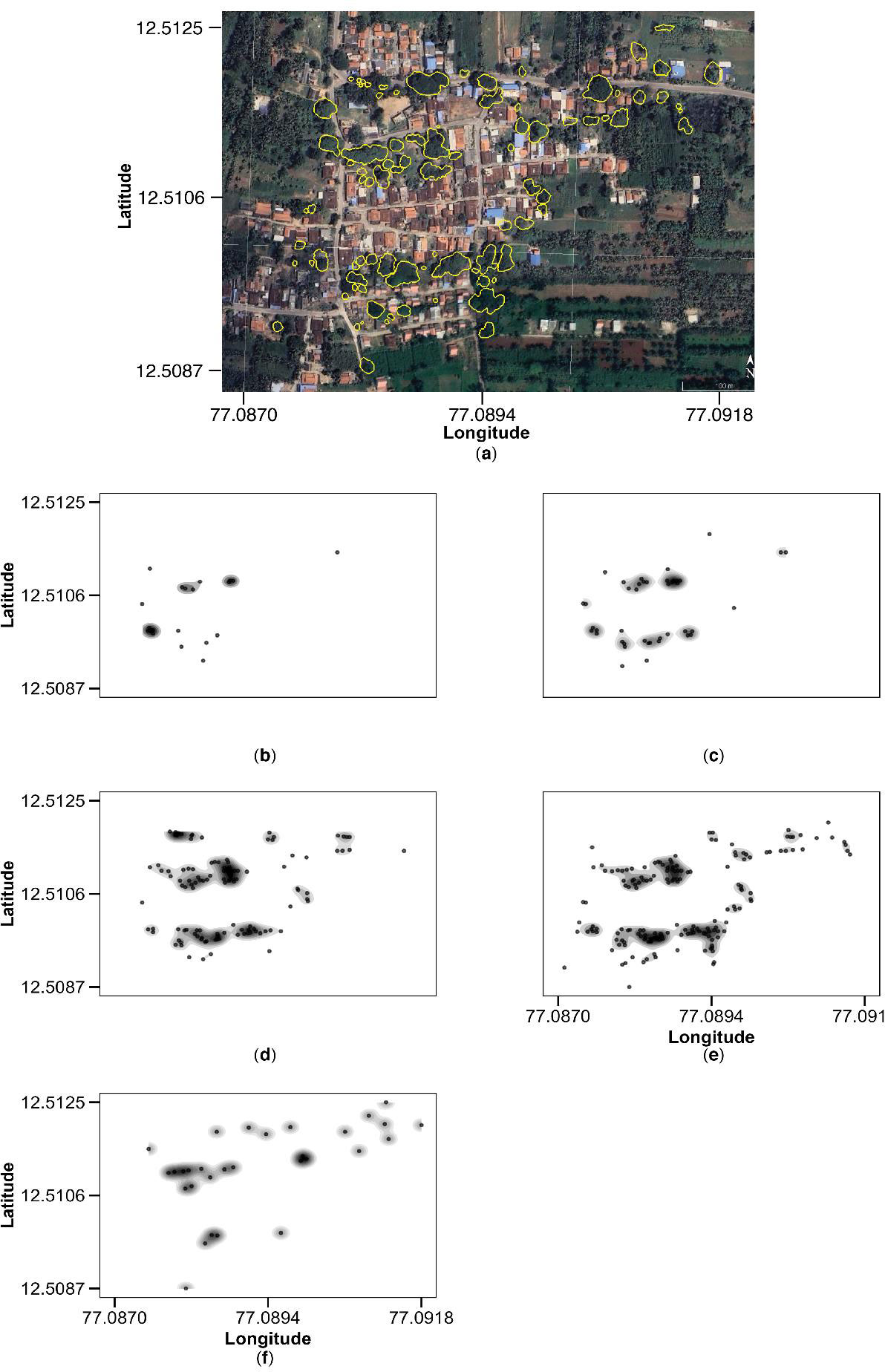
Fig. 3. Spatial context and species-specific nesting space use of colonial waterbirds in Kokkare-Bellur village. (a) Google Earth image (Map data © Google Earth) of Kokkare-Bellur village, providing spatial context for the nesting tree patches. Panels (b–f) show kernel density estimation (KDE) heatmaps representing species-specific nesting space use within the village, where darker shading indicates higher nest density. Species shown are: (b) Little Cormorant, (c) Little Egret, (d) Black-crowned Night Heron, (e) Painted Stork, and (f) Spot-billed Pelican. See Table 1 for species scientific names.
Fig. 4
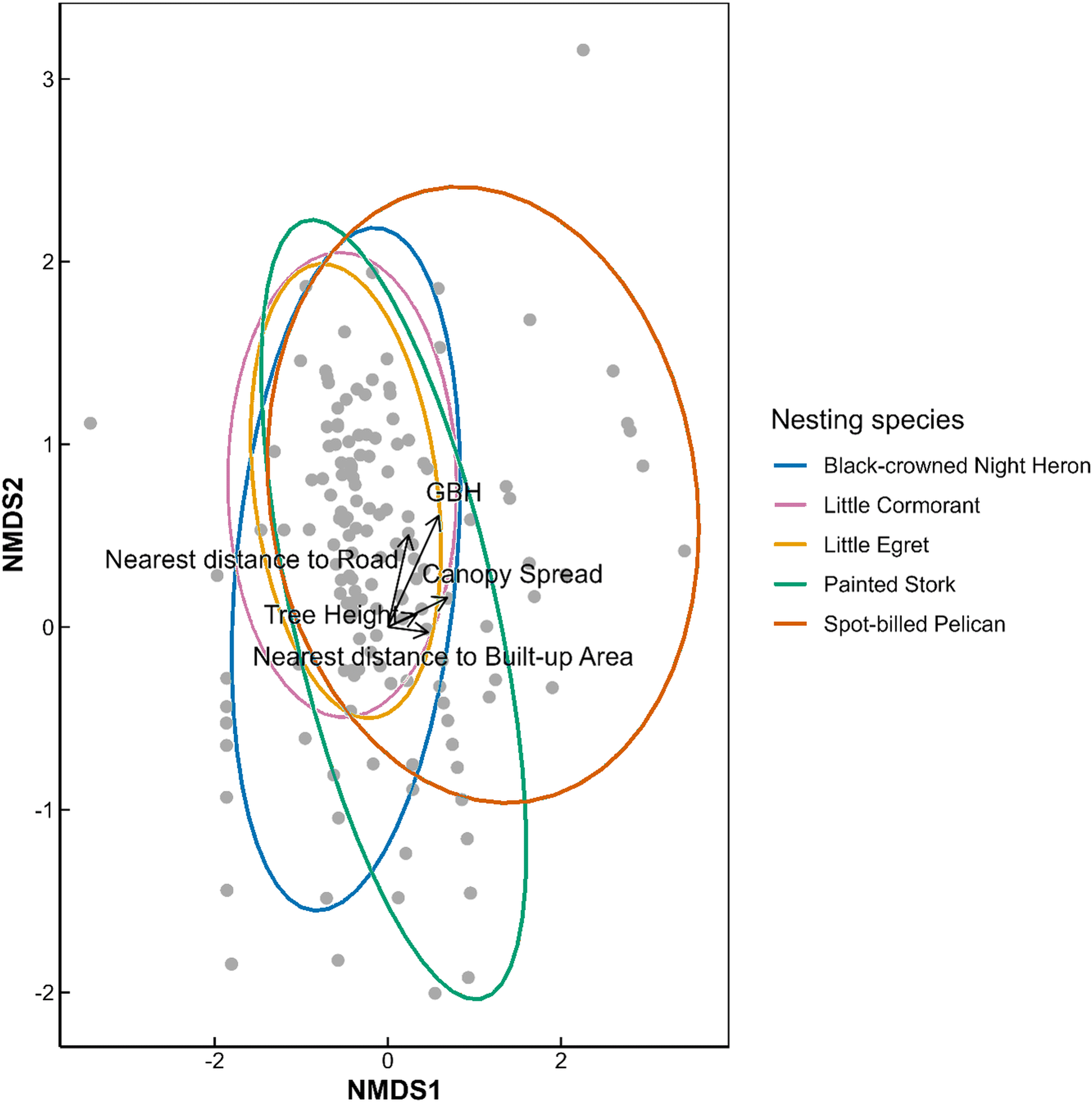
Fig. 4. NMDS ordination of nesting tree sites based on the presence of five colonial waterbird species: Little Cormorant, Little Egret, Black-crowned Night Heron, Painted Stork, and Spot-billed Pelican, via Jaccard dissimilarity. Points represent individual nesting trees, whereas colored ellipses (95% confidence intervals) indicate species-specific clustering and overlap in nesting habitat use. Arrows denote the five most influential environmental variables fitted using envfit, with arrow length proportional to the strength of correlation with the ordination axes. The ordination is displayed in two dimensions (k = 2), and stress value indicates the goodness-of-fit of the NMDS solution. See Table 1 for species scientific names.
Fig. 5
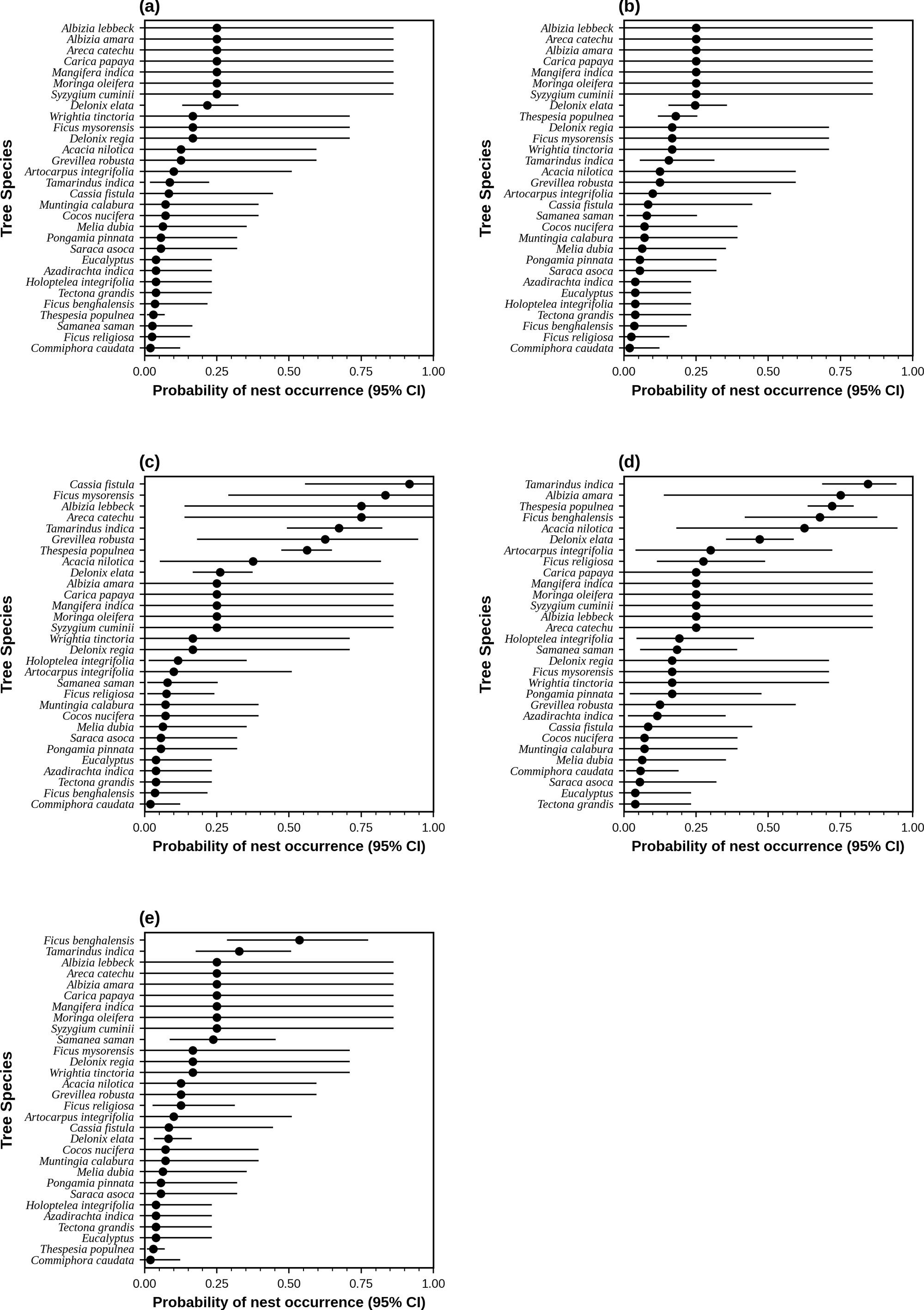
Fig. 5. Species-specific nesting-tree preferences, expressed as the estimated probability of nest occurrence on each tree species (points) with 95% profile-likelihood confidence intervals (horizontal lines), from Firth’s penalized logistic regression fitted separately for each of five colonial waterbird species: (a) Little Cormorant, (b) Little Egret, (c) Black-crowned Night Heron, (d) Painted Stork, and (e) Spot-billed Pelican. Higher probabilities indicate stronger preference. See Table 1 for species scientific names.
Fig. 6
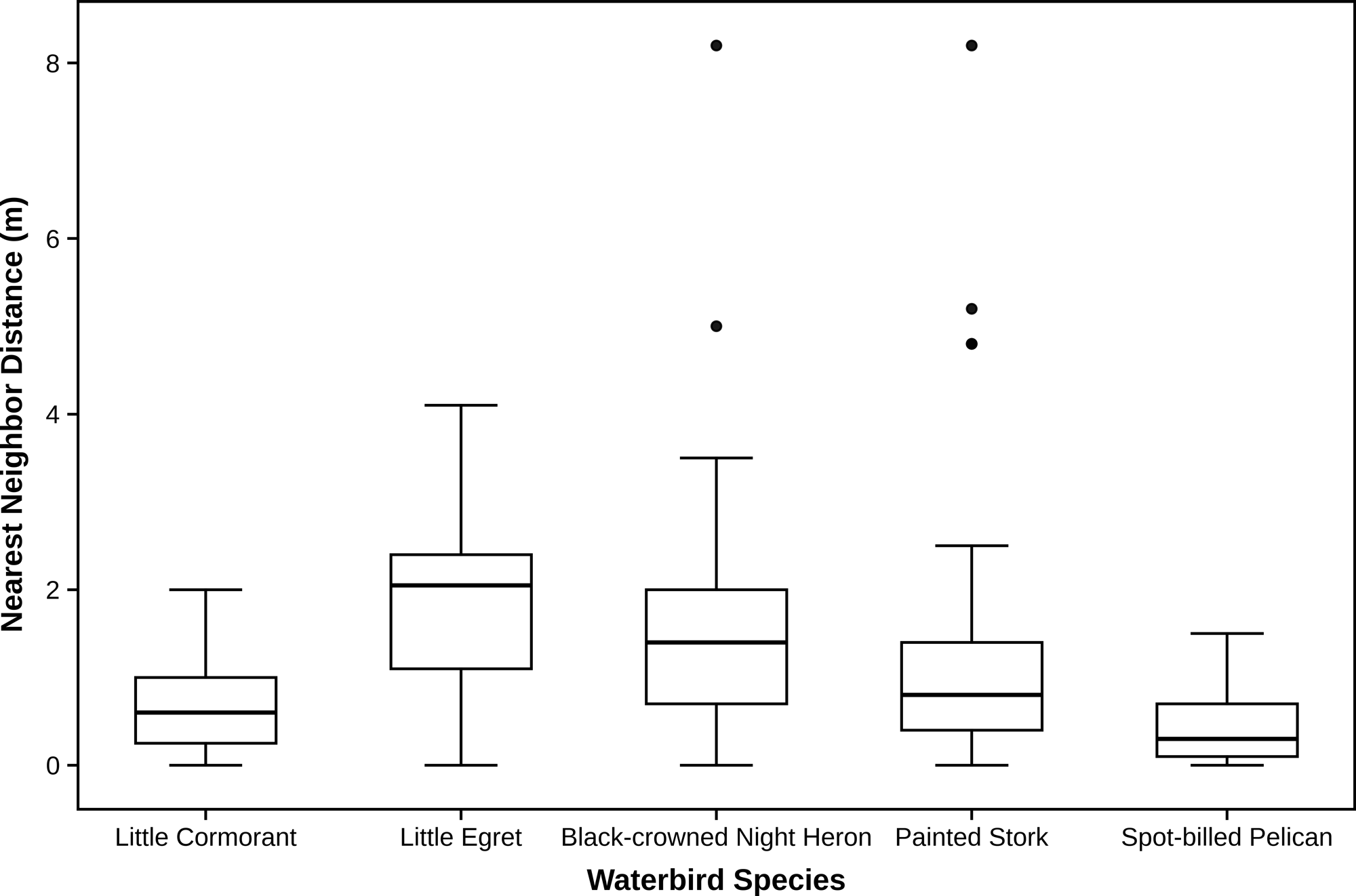
Fig. 6. Variation in nearest neighbor distance (NND, m) among five waterbird species. Boxplots represent the median (central line) and interquartile range (box), whiskers extend to the most extreme values within 1.5x the interquartile range, and points beyond whiskers represent outliers. See Table 1 for species scientific names.
Fig. 7
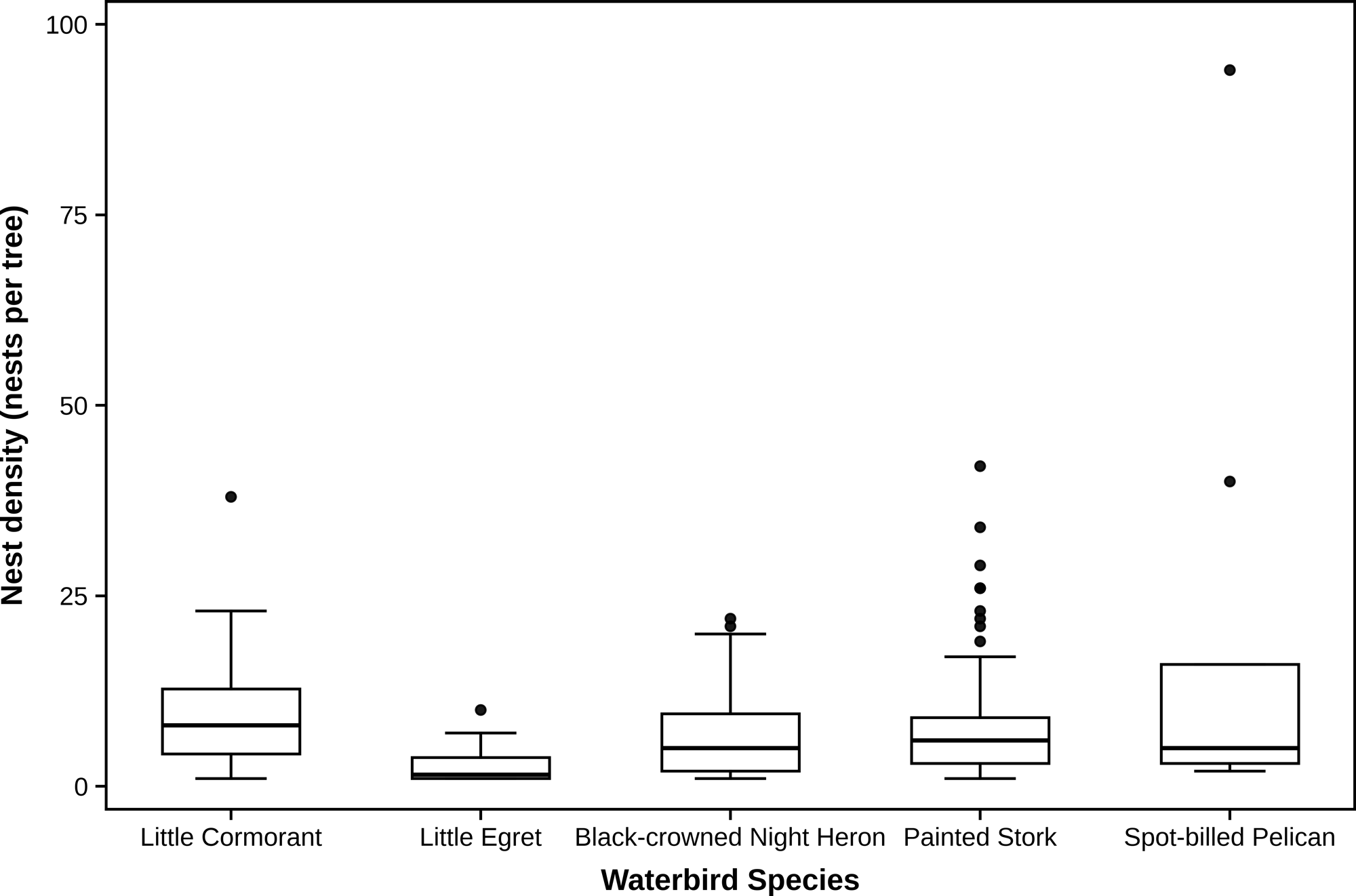
Fig. 7. Differences in nest density (number of nests per tree) among five waterbird species. Boxplots represent the median (central line) and interquartile range (box), whiskers extend to the most extreme values within 1.5x the interquartile range, and points beyond whiskers represent outlying trees with unusually high nest counts. See Table 1 for species scientific names.
Fig. 8
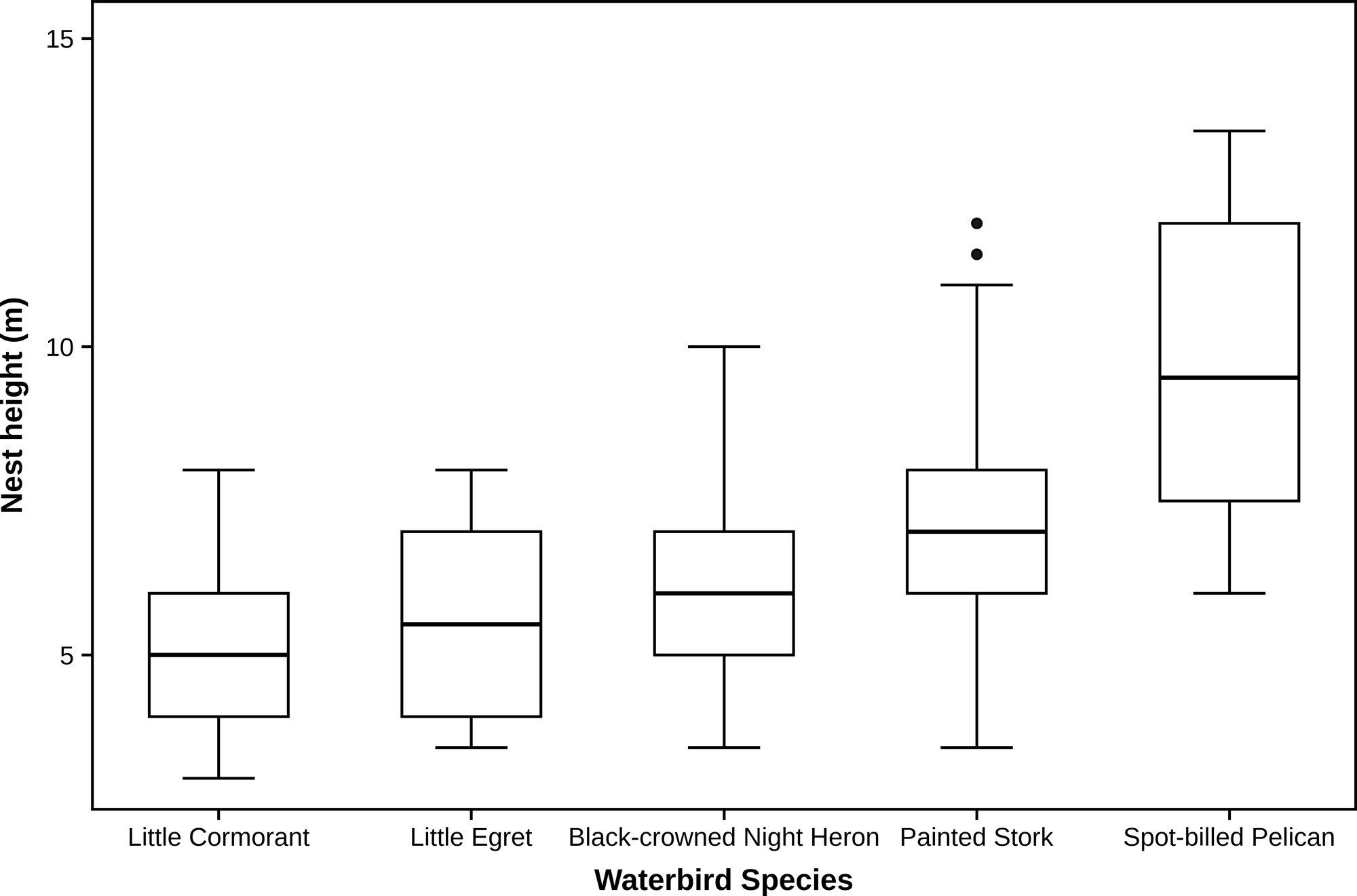
Fig. 8. Vertical stratification of nesting, expressed as nest height (m), among five waterbird species. Boxplots represent the median (central line) and interquartile range (box), whiskers extend to the most extreme values within 1.5x the interquartile range, and points beyond whiskers represent outliers. See Table 1 for species scientific names.
Table 1
Table 1. Focal colonial waterbird species studied at the Kokkare-Bellur Community Reserve (12°13′ N, 77°05′ E), Karnataka, southern India. Body length and body weight data represent the documented size ranges, sourced from the Birds of the World online database (Elliot et al. 2020a,b, Hothem et al. 2020, Mlodinow et al. 2024, Orta et al. 2024).
| Species name | Scientific name | Body length (cm) | Body weight (g) | 2018–19 nests | 2019–20 nests | 2020–21 nests | 2021–22 nests | 2022–23 nests | Total nests |
| Spot-billed Pelican | Pelecanus philippensis | 127–152 | 5100–5700 | 300 | 219 | 120 | 134 | 169 | 942 |
| Painted Stork | Mycteria leucocephala | 93–102 | 2000–3500 | 859 | 926 | 731 | 696 | 884 | 4096 |
| Black-crowned Night Heron | Nycticorax nycticorax | 58–66 | 278–1100 | - | 559 | 301 | 210 | 188 | 1258 |
| Little Egret | Egretta garzetta | 55–65 | 350–550 | - | 91 | 46 | 39 | 31 | 207 |
| Little Cormorant | Microcarbo niger | 51–56 | 360–525 | - | 213 | 47 | 23 | 0 | 283 |
Table 2
Table 2. Species-wise distribution of trees recorded at Kokkare-Bellur village, categorized by presence and absence of colonial waterbird nesting activity, thereby indicating relative nesting preference across tree species.
| Tree species | Trees without nest (n) | Trees with nest (n) | Total trees (n) | ||||||
| Thespesia populnea | 30 | 89 | 119 | ||||||
| Delonix elata | 34 | 32 | 66 | ||||||
| Tamarindus indica | 3 | 25 | 28 | ||||||
| Ficus benghalensis | 1 | 12 | 13 | ||||||
| Ficus religiosa | 11 | 8 | 19 | ||||||
| Samanea saman | 13 | 5 | 18 | ||||||
| Cassia fistula | 0 | 5 | 5 | ||||||
| Holoptelea integrifolia | 9 | 3 | 12 | ||||||
| Grevillea robusta | 1 | 2 | 3 | ||||||
| Ficus mysorensis | 0 | 2 | 2 | ||||||
| Acacia nilotica | 1 | 2 | 3 | ||||||
| Commiphora caudata | 24 | 1 | 25 | ||||||
| Pongamia pinnata | 7 | 1 | 8 | ||||||
| Azadirachta indica | 11 | 1 | 12 | ||||||
| Artocarpus integrifolia | 3 | 1 | 4 | ||||||
| Albizia amara | 0 | 1 | 1 | ||||||
| Albizia lebbeck | 0 | 1 | 1 | ||||||
| Areca catechu | 0 | 1 | 1 | ||||||
| Eucalyptus sp., Tectona grandis, Saraca asoca, Melia dubia, Cocos nucifera, Munitingia calabura, Delonix regia, Wrightia tincoria, Carica papaya, Mangifera indica, Moringa oleifera, Syzygium cuminii | 59 | 0 | 59 | ||||||